Mexico's Renewable Energy Buildout Has Moved from Policy to Projects
When we looked at Mexico's grid in June, most of the government's plan to bring private capital back into the power sector still lived on paper. Four months later, it has a pipeline behind it.
Earlier this year, the state utility CFE announced the winners of its first tender under the new esquemas de desarrollo mixto, or mixed development schemes, in which private developers build projects in partnership with CFE. Developers submitted proposals totaling nearly 38 GW, five times the 7.5 GW CFE was seeking.
CFE awarded 38 renewable projects totaling roughly 8 GW, the largest private investment round in Mexico’s power sector since the clean energy auctions of 2016 to 2018. At least 46 other projects fell short, in some cases because the transmission lines they would connect to were already saturated.
CFE awarded 38 renewable projects totaling roughly 8 GW, the largest private investment round in Mexico’s power sector since the clean energy auctions of 2016 to 2018.
More is coming. In early October, the government outlined roughly MXN 1.17 trillion in electricity and gas pipeline investment through 2030, and CFE said it plans 58 renewable generation projects totaling more than 10,400 MW. On October 22, CFE's board approved a list of additional mixed development projects to advance to the next selection stage. Bloomberg had reported that the batch under consideration totaled about 8.2 GW and $12.5 billion, though CFE has not confirmed which projects were approved or how large they are.
None of these projects has broken ground yet. As of late October, CFE said it was still reviewing the first-round projects before signing contracts and starting construction, while 64 of roughly 200 projects submitted to a second mixed development round were moving through evaluation.
Storage is moving in parallel, though more slowly. Under SENER’s call for strategic generation and storage projects, the registration window for renewable generation closed September 2. The window for stand-alone sistemas de almacenamiento de energía eléctrica (SAEE), or battery energy storage systems, now runs until March 1, 2027. This is the third time SENER has extended it, saying it wants to draw more viable proposals. The call seeks roughly 935 MW of three-hour storage across the country.
The scale of the shift is easier to see against the starting point. As Ember Energy reported in May 2026, only 26% of Mexico’s electricity in 2025 came from low-carbon sources: solar (7.38%), wind (5.99%), hydro (8.05%), bioenergy (1.67%) and nuclear (2.85%). Solar and wind together supplied only about 13% of Mexico's electricity in 2025, well below the OECD average of around 25%, yet the government now aims for 38% renewable generation by 2030, per SENER’s October 7 presentation.
A Grid Still Running Close to Its Limits
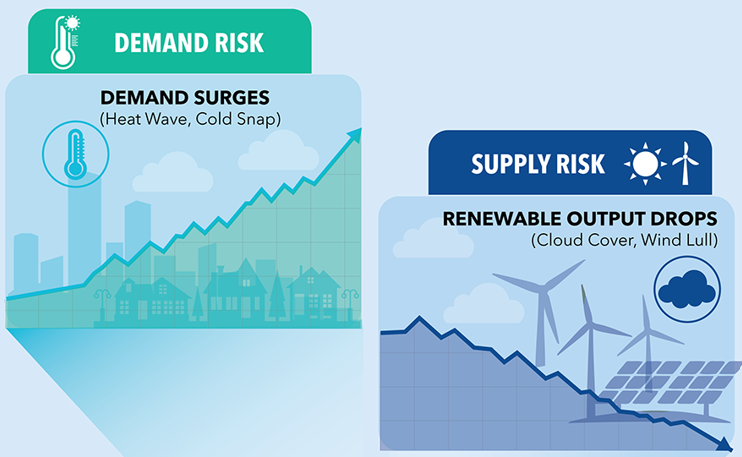
These projects will connect to a system that is handling more demand than ever, with little room to spare. Going into the summer, SENER expected operating reserves of only about 7%, one point above the 6% floor set by Mexico's Grid Code.
On July 23, all three of Mexico's power systems set record peaks on the same day for the first time. The national interconnected system reached 54,124 MW, Baja California hit 3,705 MW, and Baja California Sur peaked at 771 MW. Unlike in 2024, when tight reserves led to rolling outages across much of the country, no system-wide emergency was reported.
On July 23, all three of Mexico's power systems set record peaks on the same day for the first time.
That result is real progress, but it doesn't mean the grid has caught up. On the night of August 31, a blackout hit Yucatán, Quintana Roo, Campeche, and Chiapas, affecting roughly 745,000 users according to a complaint filed with the National Energy Commission. CFE attributed the event to alleged vandalism of two transmission lines; the cause remains disputed.
CFE reports that service interruptions from January through September fell 37% compared with 2024, while average restoration time dropped from 25 hours to 7. Compared with 2025, however, the decline was closer to 10%. The Yucatán Peninsula, where years of underinvestment left too few power plants and transmission lines, remains the most exposed region.
For new renewable energy projects, these conditions shape the economics meaningfully. Much of Mexico's transmission network was already running near capacity before this wave of projects was awarded. Every added gigawatt changes how power flows across the system. Where it can't flow, output gets curtailed.
Every added gigawatt changes how power flows across the system. Where it can't flow, output gets curtailed.
Flat Rates Are Giving Way to Market Costs
While new capacity gets most of the attention, a quieter change took effect on October 19 that shows where Mexico's cost structure is heading.
For years, companies with legacy self-supply contracts paid for transmission under porteo estampilla, or postage stamp wheeling. The charge depended mainly on voltage level, not on how far power traveled from the plant to the factory using it. A wind farm in Oaxaca could serve a plant in Nuevo León for roughly the same transmission cost as one next door.
For years, companies with legacy self-supply contracts paid for transmission under porteo estampilla, or postage stamp wheeling.
That arrangement is ending. A new methodology from the National Energy Commission, in effect since October 19, ties transmission charges to the costs set in the wholesale electricity market, including transmission, distribution, and grid operation.
Legacy permit holders can keep their existing rates for up to two years, but only if they both register interest in migrating to the new legal framework and file a formal migration request. SENER has extended those deadlines to December 18, 2026 and January 15, 2027, and the exemption ends no later than October 6, 2028.
Migration paths include entering the wholesale market, registering as a qualified user served by a competitive supplier, or moving to CFE's basic supply. SENER's September amendments also removed the minimum demand threshold for load centers migrating as qualified users, which opens the path to more facilities.
The change directly affects a specific group of legacy contract holders. The broader signal matters to everyone else: Mexico is moving away from flat, administratively set charges and toward costs that reflect the real expense of moving power across the grid.
Mexico is moving away from flat, administratively set charges and toward costs that reflect the real expense of moving power across the grid.
Mandatory Storage Turns Every Project into a Forecasting Problem
Mexico's framework requires new wind and solar projects to include battery storage equal to 30% of installed capacity, with at least three hours of discharge capacity. A 200 MW solar plant, for example, must come paired with a 60 MW battery that can deliver 180 MWh. That requirement changes what it means to operate a renewable asset in Mexico.
Mexico's framework requires new wind and solar projects to include battery storage equal to 30% of installed capacity, with at least three hours of discharge capacity.
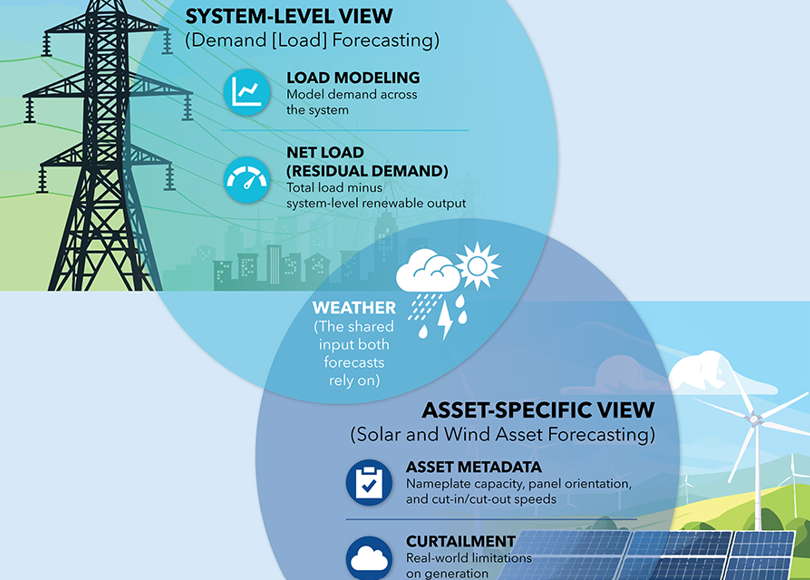
A stand-alone solar farm sells what the sun provides. A solar farm with a battery has to decide, every day, how much of that output to store and when to release it. Those decisions only work if the owner knows in advance how much energy is coming and when.
If a cloudy afternoon arrives earlier than expected, the battery enters the evening peak partly empty. If output runs higher than planned on a congested line, the extra energy is curtailed unless the battery has room to absorb it.
Three hours of storage leaves little slack. A battery that is charged too early, too late, or too little can miss the hours when the grid needs it most. With most transmission already near its limits, those misses translate directly into curtailed energy and lost revenue.
This is a different operating problem from the one most Mexican renewable asset owners have faced. It calls for asset-level generation forecasts that capture changing weather through the day, along with a clear sense of how confident the forecast is.
This is a different operating problem from the one most Mexican renewable asset owners have faced.
Rough daily estimates may have been enough when renewables were a small share of the mix. They won't be when every new project is also a dispatch decision.
What Large Power Users Should Expect
The same forces reshaping supply are changing the picture for large commercial and industrial users. Manufacturers in the nearshoring corridors of the north and the Bajío are adding load on a grid that just set records, and some are moving from fixed legacy contracts into arrangements where market conditions shape what they pay.
The same forces reshaping supply are changing the picture for large commercial and industrial users.
For a large user, that means its own consumption pattern starts to matter in new ways. When a plant runs its heaviest processes, how its load lines up with the system's tightest hours, and how much it expects to draw next month all feed into procurement and cost.
Suppliers serving these customers face the same problem multiplied across a portfolio, where an error in one facility's forecast can ripple into the whole book.
A growing share of variable wind and solar on the supply side makes those questions harder, not easier. Large users and their suppliers who understand their demand at the meter level, from tomorrow's load shape to next quarter's peaks, will be better placed to plan purchases, anticipate peaks, and avoid paying for surprises.
The Owners Who See It Coming
In June, the question was whether Mexico's reforms would translate into projects. That question now has an answer, at least for the first wave. The next question is how those projects will perform once they're running on a grid that is still catching up.
The answer will vary widely from one owner to the next. Projects in the same region, with the same technology and the same storage requirement, will produce very different results depending on how well their operators anticipate output, manage their batteries, and avoid curtailment. The same holds for large users and suppliers learning to manage costs that now move with the market.
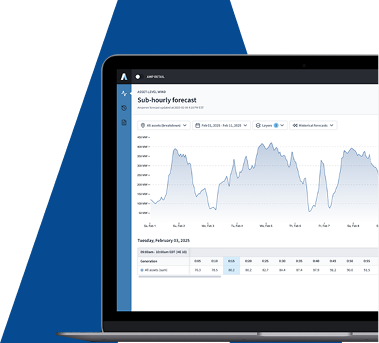
Amperon's asset-level solar and wind forecasts help renewable owners plan generation and storage dispatch with confidence, and meter-level demand forecasts help large loads and their suppliers anticipate what they'll need.
As Mexico's grid changes faster than its historical patterns can describe, that visibility may play an outsized role in future profits.
Explore Asset Optimization solutions