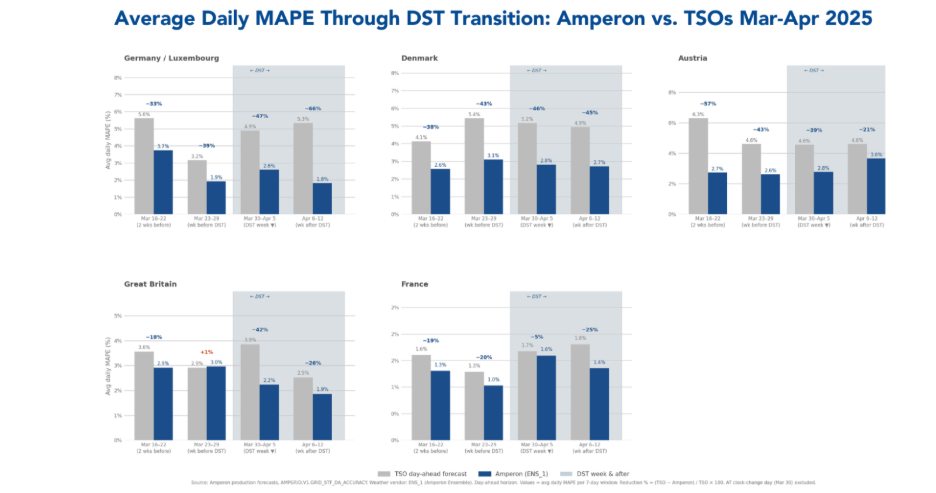
Forecast accuracy has traditionally suffered not only right as the season changes from Winter to Spring, but for weeks before and afterward. In fact, “seasonal” models often create a step change in forecast outputs at precisely the wrong time.
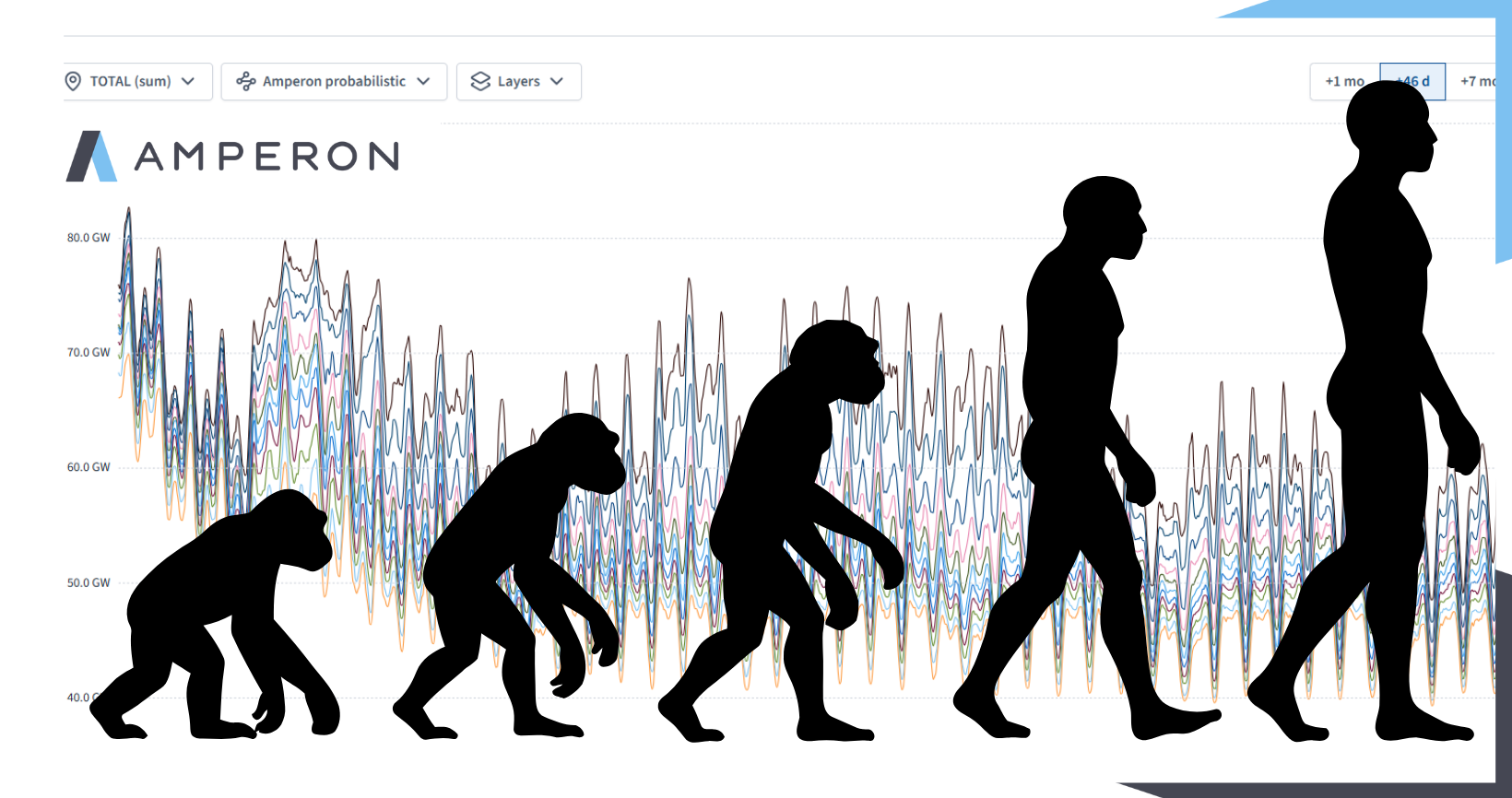
Fortunately, modern forecasting approaches tackle this problem in a fundamentally new way. Machine Learning models inherently capture the unique effects of the time change and seasonal shifts, whereas traditional models struggle with a limited workaround.
How Daylight Saving Time Affects Power Grids
There’s a reason that grid operators, power traders, and forecast providers spend weeks planning for Daylight Saving Time (DST) every year and changing their stack and fundamental models. As a practical matter, traders are unable to submit bids for the “missing hour” of spring—but the implications run much deeper.
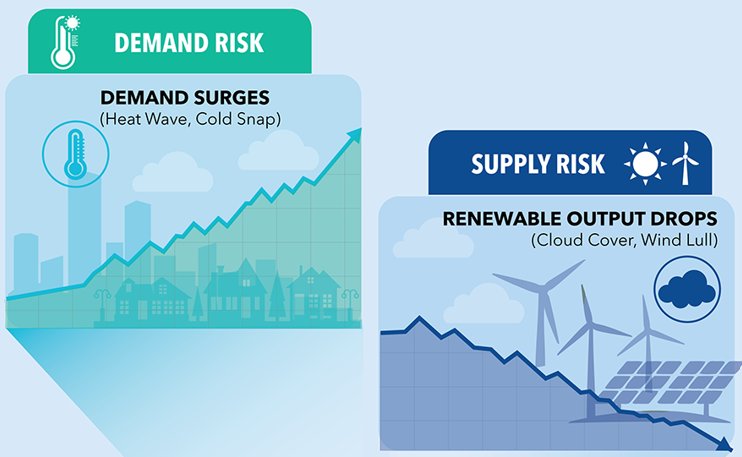
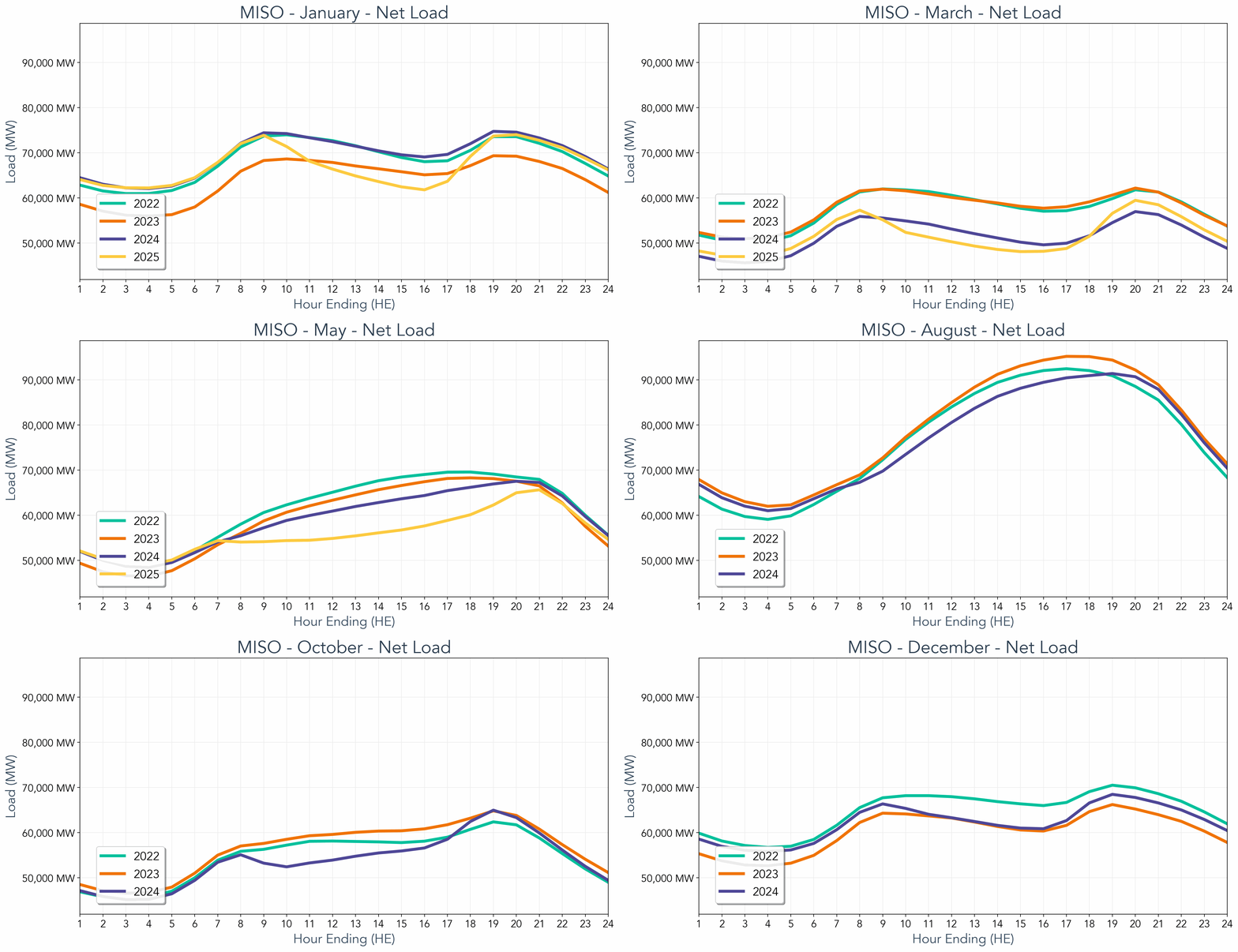
It’s not just that a single hour of nighttime buffer is removed. Once clocks jump to “summer time,” the sun rises later and demand spikes earlier. Colder, darker mornings demand more heating and hot tea for a few weeks. Load also tends to ramp faster.
Similarly, evening daylight keeps people active until close to bedtime, at which point load ramps down rapidly. Overall, people align their activities more closely during summer time, creating challenges for power grids that can show up as price volatility.
Additionally, Easter is a time of longer school breaks—up to two weeks in some countries—as well as a plethora of public holidays that tend to be concentrated around the Easter calendar and the weeks that follow. All of these changes create structural demand shifts.
Colder, darker mornings demand more heating and hot tea for a few weeks. Load also tends to ramp faster.
Why Traditional Seasonal Models Struggle with the Start of Spring
Legacy forecasting vendors typically maintain separate model versions calibrated to heating-season and cooling-season behavior. This “calendar segmentation” approach creates an abrupt change in their forecasts, even though true seasonal changes happen gradually.
To make matters worse, they often switch models around the start of Spring, amplifying forecast error precisely when volatility is already high. And if an April cold snap shows up after the cooling-season model is in effect, forecast misses can be quite significant.
As a result, most vendors stay relatively quiet during this period.
Legacy forecasting vendors typically maintain separate model versions calibrated to heating-season and cooling-season behavior.
Why Spring Solar Forecasting is Particularly Challenging
Solar production also changes rapidly during the weeks before and after the spring equinox. That is when the days are getting longer the fastest, adding nearly 10 minutes a day depending on the location. And that’s not the only complication.
People keep building solar throughout the winter, yet new solar installations don’t make much of an impact until the sun comes out in the spring and these extended daylight hours and stronger irradiation start to kick in.
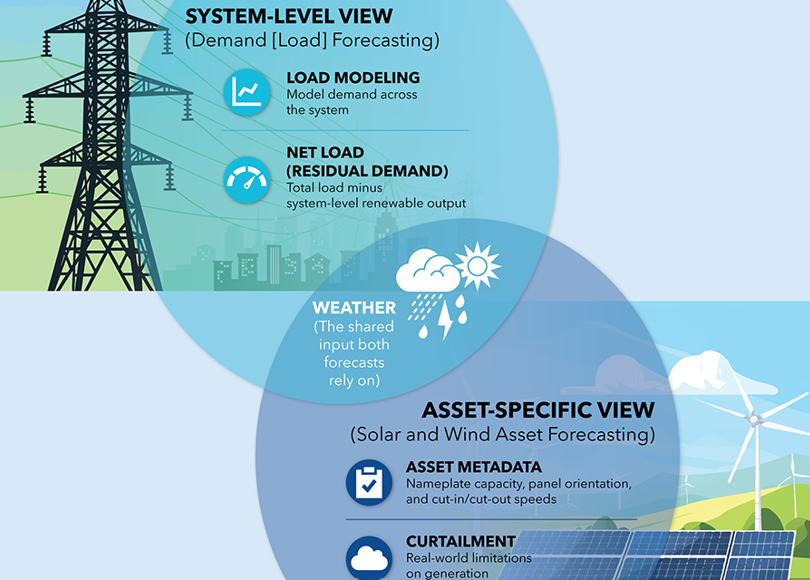
Behind-the-meter solar is particularly troublesome, as it often lacks direct metering visibility. This makes it challenging to forecast solar output and resulting net load.
Using last year’s solar production, even adjusting for current weather patterns, is insufficient. Traditional forecasting providers typically add a “best guess” of the impact of winter solar installations into their latest summer-season model.
To maintain accuracy, models must incorporate new solar contributions in near real time. Fortunately, modern forecasting approaches can tackle this problem in a fundamentally new way.
New solar installations don’t make much of an impact until the sun comes out in the spring and these extended daylight hours and stronger irradiation start to kick in.
Why Machine Learning Models Better Capture Seasonal Shifts
Amperon’s hybrid approach to energy forecasting incorporates not only physics-based modeling, but also machine learning (ML) techniques that can dynamically account for a huge range of variables.
Not only does ML incorporate more variables, but it can “see” changes as they happen. Changing market reactions to the arrival of Spring are incorporated into model re-training hourly, including the effects of behind-the-meter solar additions.
Changing market reactions to the arrival of Spring are incorporated into model re-training hourly.
For Amperon, a new season is business as usual. We continue to provide industry-leading accuracy before and after the flowers and trees start to bloom and we put away our winter clothes.
How to Prepare for Spring
As the UK approaches British Summer Time (BST) and much of the rest of Europe moves to Central European Summer Time (CEST), power traders must prepare for a structural shift. Although it happens every year, many continue to be caught off guard.
The new season brings under-appreciated complexities. Don’t let your forecast be an additional source of uncertainty. With a modern forecast provider, you can be ready for whatever comes your way.
Request a 30-Day Free Trial to see how much your seasonal forecast has been costing you.

.svg)











































%20(3).png)
%20(2).png)
%20(1).png)






.png)


.avif)




.avif)
.avif)

.avif)

.avif)
%20(15).avif)

.avif)


.avif)


.avif)
.avif)