As Charles Dickens wrote in the Tale of Two Cities, “It was the best of times, it was the worst of times.” That adage perfectly characterizes the energy transition in Europe, as differing approaches to renewable energy lead to very different market dynamics, especially during extreme weather.
Winter Weather Plagues European Grids
Europe is exiting a two-month period which has been measured as easily one of the coldest winters in 20 years for much of the continent. An arctic high situated in the Nordic region and over Russia pushed deep into east and central Europe and dominated weather conditions there for most of the first 7 weeks of the year. This high then funneled a series of low-pressure systems and storms off of the Atlantic Ocean and down over the Iberian Peninsula and the rest of the Atlantic coast.
These extreme weather conditions brought with them widespread snow and freezing temperatures in the Nordics, Germany, Poland and other central European countries. Spain experienced near-normal temperatures for the most part, but constant high winds and heavy rainfall.
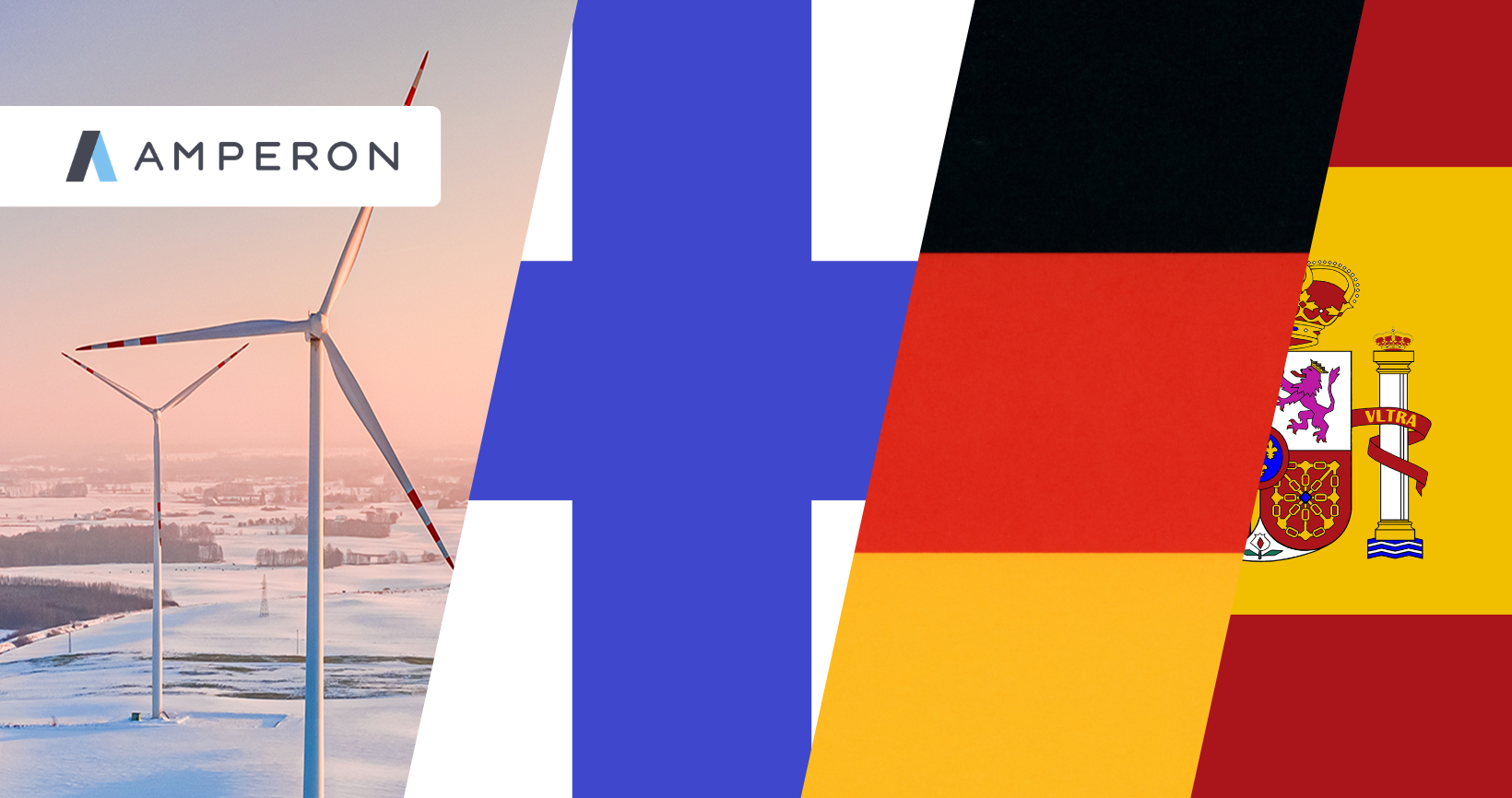
The first week of February, and especially the 3rd of February, highlighted the growing consequences of weather extremes for electricity markets across Europe, each of which has adopted different policies around renewable energy. Finland, Germany, and Spain each had extraordinary market conditions on the 3rd of February, and all in very different and unique ways.

Finland, Slow to Adopt Renewables, Relied on Imports During Extreme Cold
On the third of February, Helsinki was suffering through a very cold and dark stretch of weather. It was -14C at midnight, but this had dropped to -17C by mid-morning, and the daytime high only managed to climb to -9C. This is particularly cold, even by Finnish standards, and resulting electricity demand was sharply higher than normal for February.
Demand peaked at 14,367MW for HE10 in Finland, and at the same time power prices hit 458.44 EUR/MWh. On the whole, the day outturned at 387.71 EUR/MWh, with the highest hourly price for the day exceeding 613 EUR/MWh. Electricity demand was as much as 41% higher than normal and averaged 14% higher than normal for early February.
The Finnish generation mix that day was dominated by imports from Sweden, providing as much as 6.9 GW of energy in some hours. The situation was only modestly supported by wind generation situated inside the country, with 2 GW of generation helping out in the peak demand hour and through the first part of the day—supplying 14% of Finnish demand, and then dropping down to just 3% of supply by the end of the day.

German Wind and Solar Helped Stabilize Prices and Facilitate Exports
Germany, on the other hand, was also experiencing much below normal temperatures, and had been doing so for some days already. Temperatures in Berlin were -9C for HE10, and peak demand came at the same time, reaching 68,786 MW. Demand remained high all day and was about 12% higher than normal during that critical morning peaking period.
Interestingly, however, the price effect in Germany was muted. Unlike Finland, which experienced price spikes and scarcity pricing effects, the German market outturned at less than 100 EUR/MWh for the day, and that peak demand hour of HE10 was priced at just 108.23 EUR/MWh.
The reason for this is quite clear. Winds were high and steady that day in Germany, and while Finland only has enough wind capacity installed to theoretically cover 60% of that days demand, installed wind capacity in Germany is effectively the same amount as the demand on Feb 3rd. Installed capacity is just one way to represent the amount of wind on the system, but the reality is that German supply was actually covered 58% by wind across that day, which unquestionably helped keep prices modest.
Solar generation, typically rather low in the winter, contributed as well, providing an additional 10 GW of generation over the solar peak, meaning the net amount of demand covered by renewables on 3rd February reached as high as 71% and averaged 62% across the day. Most remarkably of all, on such a cold day with high demand, Germany was a net exporter of energy in each hour, averaging 5.6GW of exports hourly across the day.
Spain, Saturated with Rain and Renewables, Faced Large-Scale Curtailments
Spain, the last of the three markets we are looking at, had temperatures near normal on 3rd Feb, and demand, while as much as 10% higher than normal during the morning peak, was on average only marginally higher than normal for that time of year. Temperatures in Madrid were cool, just +8C as a high and +5C as a low, but milder on the coast.
The big story affecting Spain that day, as it has been for most of the year so far, was the high winds and rain that were pounding the country. By the start of February, rain had been falling enough that many Hydro facilities were shifting from economically dispatching where possible to be forced into must-run situations. Additionally, wind production in particular has been much higher than seasonal normal, and the huge boom in renewable capacity installed over the last 7 years in Spain has resulted in many instances where the market cannot absorb all of the renewable energy wanting to come online.
On February 3rd, demand averaged just over 30 GW and peaked at 38 GW in the evening. Renewables production, however, was almost 20 GW during the solar peak, adding to the nearly 7 GW of Hydro production during the day. Maximum imports were being pushed into the country from Portugal, which was experiencing similar weather and market conditions. The Spanish market was beyond its maximum capacity to consume the renewable energy being bid into the market.
The end result was a large amount of curtailment activity. This curtailment was spread across both Solar (FV and Thermal) and Wind, with a total of 60.6 GWh of total potential production being curtailed across the day—with the maximum hourly curtailment (HE 12) equaling 3,092 MW, or 8% of the system load at that time. The price effect was equally as dramatic. Prices in Spain averaged just 32.74 EUR/MWh baseload, with 13 hours of the day pricing at or very near to zero.

The Energy Transition is Non-Linear
The 3rd of February brought into focus the disparate effects that the energy transition is having on various electricity markets across Europe.
Finland has been rather slow on developing wind and solar renewables, with its OL3 nuclear reactor being the largest capacity addition in the last decade, even as it was plagued by cost overruns and a commissioning delay of almost 13 years. Finland has put a lot more focus on wind renewable development over the last several years, and installed wind capacity is growing rapidly, but still on the coldest of days, the market resolved itself in a much more traditional fashion: with scarcity price spikes.
Germany, Europe’s most mature market for renewable energy, reaped an enormous benefit from this supply source on 3rd of February, weathering a cold winter day with stable prices, and indeed exported energy to other markets. Nevertheless, Germany is at risk, too: had the wind not showed up like it did that day, the market would have certainly priced far higher.
Lastly, Spain, which has seen the largest growth of non-subsidy-supported renewable energy capacity installations in Europe over the last decade, has in some ways been the victim of its own success. Too much energy on the system can result in curtailments, uneconomically low prices, and a lot of PPA counterparties suffering the consequences—which will almost certainly hurt the investment prospects of additional projects in the future.
These case studies highlight that the energy transition is not a single, linear pathway, but a mosaic of national experiments unfolding at different speeds and under different constraints. As the transition accelerates, the lessons emerging from each market can serve as guideposts, but each country will continue to chart a path that reflects its own resource mix, regulatory environment, and economic priorities. In this environment, anticipating market dynamics is increasingly difficult—and increasingly important.

.svg)































%20(3).png)
%20(2).png)
%20(1).png)





.png)


.avif)


.avif)
.avif)

.avif)
.avif)
%20(15).avif)
.avif)


.avif)

.avif)