

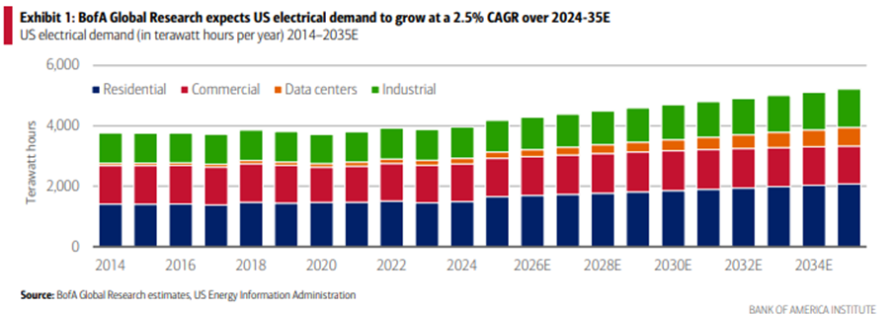
Data centers and AI tools have already integrated into a wide range of industries and practices, from hospitals and trading firms to supply chain and consumer recommendation engines. Data center growth has become a central pillar of the technology industry's financial planning, with companies collectively committing hundreds of billions of dollars to data center construction and expansion in 2024 and 2025 alone. But the industry can no longer sidestep the real constraint behind that growth: the power these data centers require.
What was once dismissed as a theoretical concern has become an urgent reality, one that is already reshaping energy markets, straining the electrical grid, and forcing a hard rethink of how this country generates and distributes power. One answer is already in front of us: Small Modular Reactors (SMRs), one of the only near-term paths that closes the gap between AI's power demand and the grid's ability to supply it without locking in another generation of fossil fuel dependence.
AI servers used approximately 63 TWh of electricity in 2024, or 15% of total data center electricity consumption, roughly 173 GWh every day. That figure is projected to surpass 300 TWh by 2030, or about 822 GWh a day, enough, by a rough estimate based on average U.S. household electricity use, to power over 28 million American homes. Yet the generation mix isn't ready for that surge. Fossil fuels still account for roughly 60% of total U.S. electricity generation, while nuclear energy contributes only 18.6%, a share with substantial room to grow.
Nuclear plants offer something fossil fuels and renewables can't match: constant, 24/7 generation without the swings of weather or fuel markets. The industry's hesitation isn't about whether nuclear works. It's about whether anyone is willing to pay for it. That hesitation is becoming a liability the country soon won’t be able to afford.
Small Reactors with a Big Impact
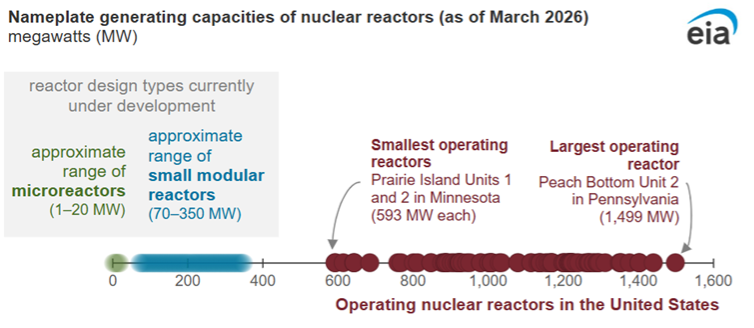
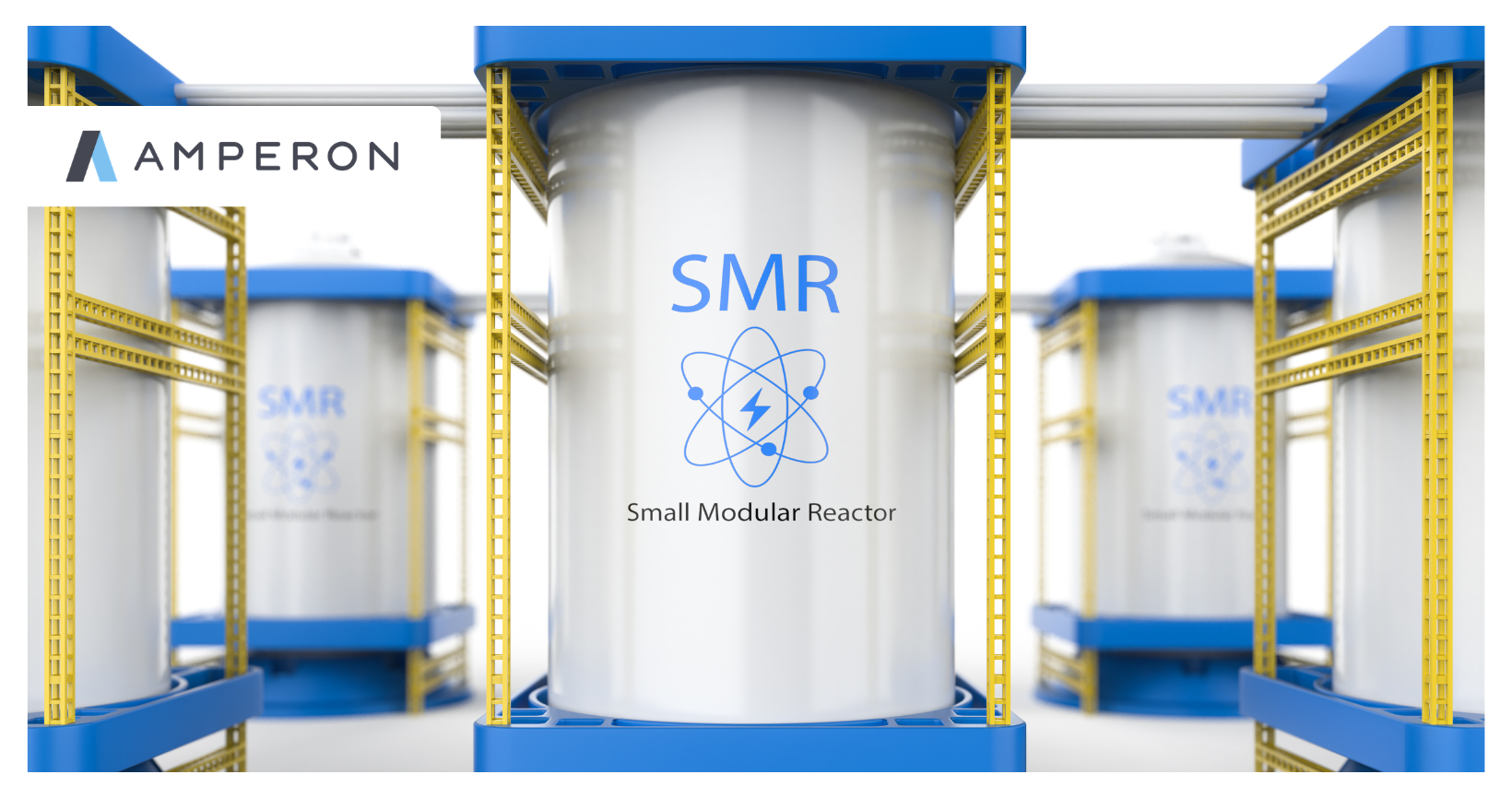
Small Modular Reactors are the most viable near-term path out of this bind. These reactors are mini nuclear plants generating roughly 300 MW each, and they deliver exactly the kind of steady, reliable power the grid needs to keep pace with AI-driven load growth. Companies like NuScale Power, Oklo Inc., X-energy, TerraPower, and others have already begun construction and are working through approval of their designs.
A single 300 MW SMR would have covered only about 4% of 2024's AI electricity demand, a modest number on its own, but that's the wrong way to look at it. With roughly 15–25 individual SMR units aiming to be operational by 2030, the cumulative impact adds up fast: assuming 20 units are built and running at a realistic capacity factor, that fleet could generate about 50 TWh a year, or roughly 137 GWh per day. This is a very meaningful dent in the gap this industry is racing to close, and it's exactly why SMRs deserve far more urgency than they're currently getting.
Why SMRs Are a Natural Fit for Data Center Loads
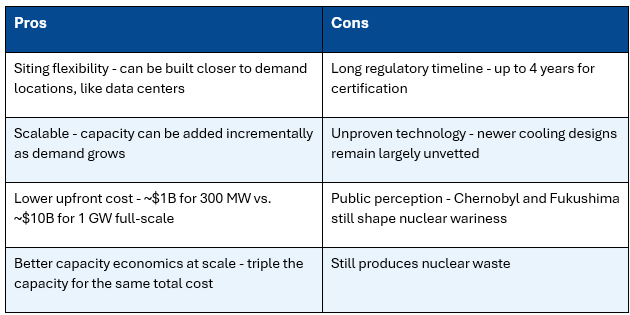
SMRs' siting flexibility and scalability are structural advantages that full-scale nuclear facilities can't offer. While full-scale nuclear facilities require specific locations with abundant water and land, SMRs can be built in places a traditional reactor never could, like isolated sites with limited water and acreage, putting them closer to where the power is actually needed—including at data centers themselves. That siting flexibility pairs naturally with scalability: as data centers expand, operators can add SMR modules incrementally rather than gambling on a single massive, all-or-nothing nuclear project. This is a better-designed solution to the exact problem AI companies are facing right now.
Additionally, a single SMR requires roughly $1 billion in upfront capital for 300 MW, compared to a full-scale nuclear reactor that can cost 10 times as much for roughly 3-4 times more power. That lower barrier opens the door to a far wider pool of investors, not just the handful of utilities with balance sheets large enough for a multi-billion-dollar mega-project. Furthermore, the economics only improves at scale: for the same $10 billion it takes to build one full-scale 1-GW reactor, an investor could build ten SMRs instead, delivering triple the total capacity for the same overall spend.
The Case Against SMRs, and Why It Doesn't Hold
The case against SMRs is real, and it deserves a straight answer. Certification can take up to 4 years, though NuScale's design already cleared that bar, becoming the first SMR to win full NRC certification in January 2023 and proving the pathway works even as the rest of the field works through it. Even so, newer designs like molten salt and liquid metal cooling remain largely unvetted. Public perception still carries the weight of Chernobyl (1986) and Fukushima-Daiichi (2011), and SMRs still produce nuclear waste, which no one should pretend is a solved problem. Then there's the most common objection of all: natural gas is cheaper. Simple-cycle gas turbines can cost as little as $171/kW to $1,150/kW to build, dramatically less than an SMR's roughly $4,800 to $5,200/kW, and gas wins on levelized cost of electricity today, running $40 to $75/MWh compared to $80 to $150/MWh for first-generation SMRs.
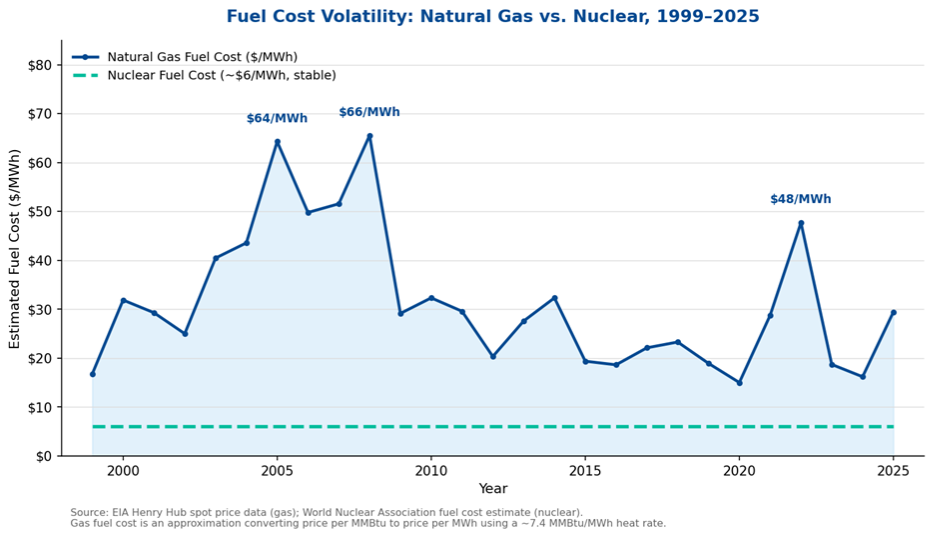
None of that changes the conclusion, because every one of those objections stops at year one. Gas plants lock utilities into decades of fuel-price volatility: gas LCOE moves roughly 7% for every 10% swing in fuel prices, while nuclear fuel costs are minor and stable. Gas turbines frequently run as peaking capacity rather than true baseload, while SMRs run at capacity factors near 90 to 95%, delivering far more usable energy per megawatt over a year, exactly the kind of firm, dispatchable capacity that strengthens resource adequacy and, by diversifying the fuel mix away from a source with fuel-price-driven swings, moderating overall price volatility, even if it doesn't guarantee lower average prices. Gas also carries hidden infrastructure costs, new transmission lines and pipeline capacity, that never appear in the sticker price. The regulatory timeline and unproven designs are the price of building something new; the premium over gas is the price of stability. Both are worth paying, and waiting on the sidelines is the one option that guarantees the gap stays open.
The Road Ahead for Small Reactors
Small Modular Reactors are the best near-term answer to the AI industry's energy demands, and the case for them is already made. The real risk isn't that SMRs fail to deliver, it's that regulatory inertia, first-cost sticker shock, and outdated public perception delay them long enough that the AI industry locks itself into another decade of fossil fuel dependence by default, not because gas was the better long-term choice, but because it was the path of least resistance.
Companies and regulators serious about solving the data center power crisis don't have the luxury of waiting to see how the first few SMR projects play out. The technology, the cost structure, and the demand curve are already aligned. What's missing is the willingness to move at the speed this problem demands. If the industry treats SMRs the way it has treated nuclear power for the last thirty years, cautiously, incrementally, and always a decade away from mattering, it will have manufactured its own energy crisis. The alternative is to start building now.

.svg)

























%20(3).png)
%20(2).png)
%20(1).png)



.png)


.avif)


.avif)
.avif)

.avif)
.avif)
%20(15).avif)
.avif)


.avif)

.avif)



