Ontario’s Market Renewal Program has delivered exactly what it promised: a cleaner, more transparent, and more predictable wholesale electricity market that finally aligns dispatch decisions with prices.
Last year, Ontario’s Independent Electric System Operator (IESO) shifted to a Single Schedule Market, launched a Day-Ahead Market, and implemented Enhanced Real-Time Unit Commitment. These reforms have pulled Canada’s most populous province into line with global best practices, eliminating long-standing distortions and improving operational efficiency across a baseload-dominated grid.
Yet even with these structural wins, volatility has not disappeared. Weather-driven wind output, seasonal hydro conditions, and a geographically concentrated load continue to inject sharp real-time price swings and congestion into the system, revealing that better market design can mitigate—but not eliminate—the fundamental physics of power.
Ontario’s Market Renewal Program Brought Three Important Reforms
In May of 2025, Ontario’s Market Renewal Program (MRP) officially went live, and we are now approaching its first anniversary. At its core, the program was designed to improve market efficiency and better align prices with the true cost of producing and consuming electricity.
The Single-Schedule Market
The centerpiece of the reform is the Single Schedule Market (SSM), which replaced the old two-schedule system. Under the legacy setup, dispatch schedules and settlement prices were calculated separately, creating a chronic misalignment between what generators were told to do and what they were actually paid for.
The inevitable mismatches forced IESO to pay Congestion Management Settlement Credits (CMSCs)—to the tune of tens of millions annually—to compensate generators dispatched contrary to price signals.
The SSM resolves that disconnect by using a single calculation to set both dispatch instructions and prices simultaneously, so that what generators produce is what they get paid for.
The Day-Ahead Market
Prior to MRP, Ontario was notably absent from the club of ISOs that offered a formal day-ahead settlement, leaving market participants without forward price signals.
The DAM gives participants the ability to lock in commitments and prices a day in advance, improving operational planning and reducing exposure to real-time price volatility. Final settlement flows through the Day-Ahead Real-Time Settlement (DARTS) process, which reconciles day-ahead commitments against actual real-time output.
For generators, this means more predictability in revenue. For the grid, it means fewer last-minute commitments of expensive peaking resources.
Enhanced Real-Time Unit Commitment
Rounding out the reforms is Enhanced Real-Time Unit Commitment (ERUC), which ensures that the least-cost generation available is committed first when real-time conditions shift.
Before ERUC, less efficient units could be called on simply because they were already online. Now the commitment logic explicitly optimizes for cost, which keeps expensive generation in reserve unless it is actually needed.
IESO’s Generation Fleet is Largely Firm and Carbon-Free
Nuclear and hydro are the twin pillars of Ontario's generation fleet, making IESO one of the most carbon-free grids in North America. Nuclear accounts for roughly 50% of total generation output and runs essentially around the clock as baseload, while hydro contributes about 25%.
Together, they mean that on most hours of the year, Ontario's grid is operating on a nearly emissions-free stack before a single wind turbine or gas plant is dispatched.
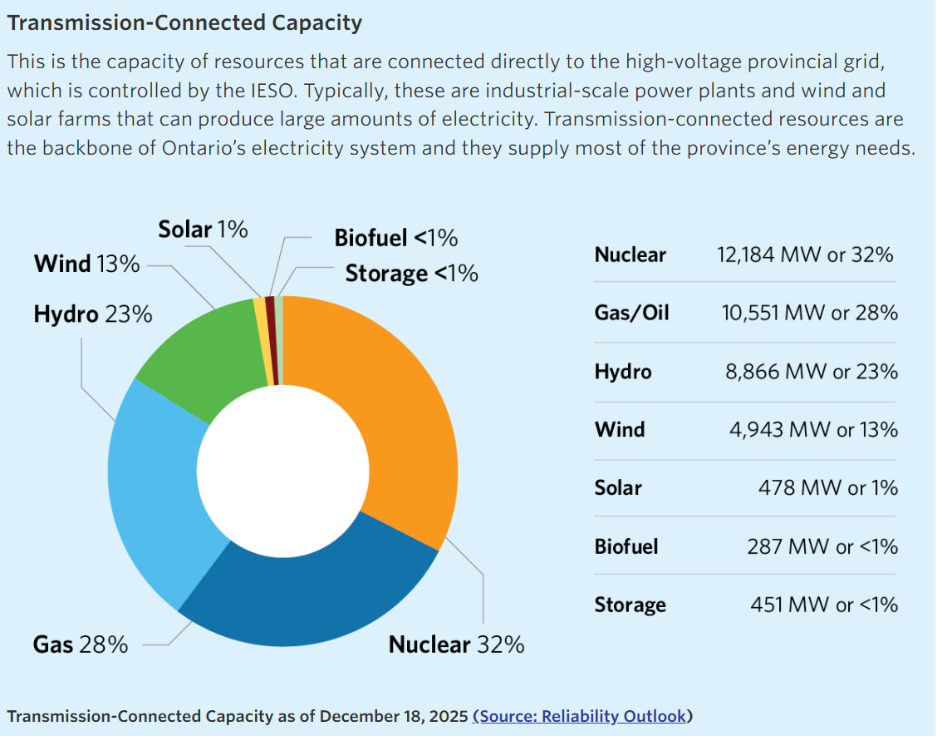
That was not always the case. In the early 2000s, coal made up approximately 20% of Ontario's generation mix. Through a deliberate and aggressive retirement program, the province shut down every coal plant in the province by 2014, a feat no other major grid operator in North America had accomplished at the time. Wind and gas largely stepped in to fill the gap left behind.
Concentrated Demand is Misaligned with Clean Generation, Creating Bottlenecks
Previously, province-wide pricing masked significant differences in grid congestion between highly populated areas in Southern Ontario and the vast expanses to the north. The new Day-Ahead Market introduced roughly 1,000 pricing nodes across Ontario’s grid, revealing significant transmission constraints.
Ontario is home to over 15 million people and contains nearly 40% of Canada's total population, with more than 40% of that concentrated in the Toronto metro region. That geographic concentration means that demand is heavily weighted to the southeast corner of the province.
Meanwhile, the bulk of clean generation sits to the north and west, a structural tension that the new nodal pricing framework under MRP is now better positioned to surface and manage.
Wind generation is concentrated near the major demand centers in the southwest and west of the province, a geographic alignment that helps reduce transmission losses. Most of Ontario's hydro capacity, by contrast, sits in the far Northwest zone, a much less populated part of the province, which means that hydro output has to travel long distances to reach where demand actually is.
Imports, Exports, and Interconnections Create a Dynamic Market
Ontario's ties to neighboring systems are a defining feature of the market. IESO directly connects with New York, Michigan, and Minnesota on the US side. Net exports to regions like NYISO have declined in recent years as Ontario's own demand has grown, a prolonged drought the past few years has reduced hydro output, and nuclear refurbishment outages have further reduced available supply.
Flows are still very much present, however, particularly overnight when nuclear generation continues running steadily while Ontario demand falls. That overnight surplus finds a home in neighboring markets, keeping prices low and keeping baseload utilization high. NYISO imported ~600–900 MW from Ontario most hours in 2021–2024.
As nuclear refurbishments wrap up through the late 2020s and 2030s and new capacity comes online through IESO's Long-Term RFP procurements, the export picture could shift again.
Wind Volatility and Seasonal Weather Sensitivity Remain
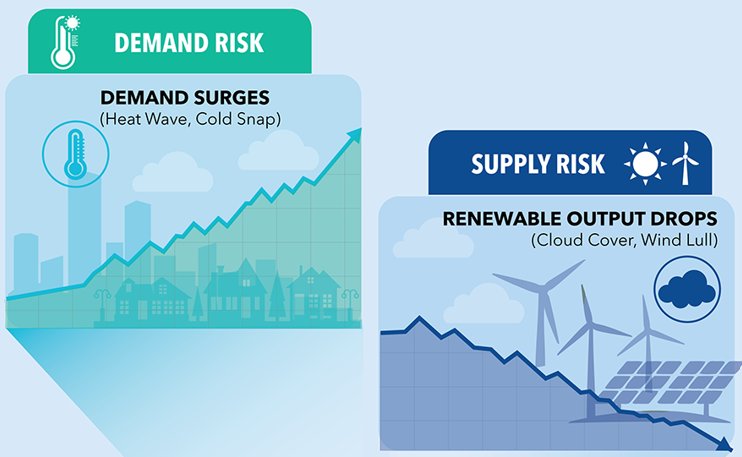
Hydro and wind behave very differently on the grid, and understanding those nuances matters for reading real-time prices in Ontario. Hydro is relatively predictable day-over-day, but it can vary significantly by season depending on precipitation and snowmelt. Wind output ramps up and down on very short time scales, which can push real-time prices well below day-ahead levels.
Precipitation deserves special attention in any IESO analysis. Because hydro makes up roughly a quarter of generation, a dry year directly reduces available clean energy, putting upward pressure on gas dispatch, natural gas prices, and the broader supply and demand balance.
In a wet year with strong snowmelt and reservoir levels, hydro output expands, exports tend to increase, and prices can soften considerably. This seasonal hydrological cycle is one of the more underappreciated drivers of year-over-year price variation in Ontario.
Wind is a different animal entirely. Large low-pressure systems sweeping across the province can produce strong generation in one zone while leaving another nearly calm, creating zonal imbalances and congestion.
When it underperforms expectations, the reverse happens. This is one of the clearest mechanisms through which RT prices diverge from DAM in IESO, and it is a dynamic that will only become more pronounced as the nodal pricing under MRP makes zonal price differences visible for the first time.
Ontario's Climate Adds Another Layer of Grid Complexity
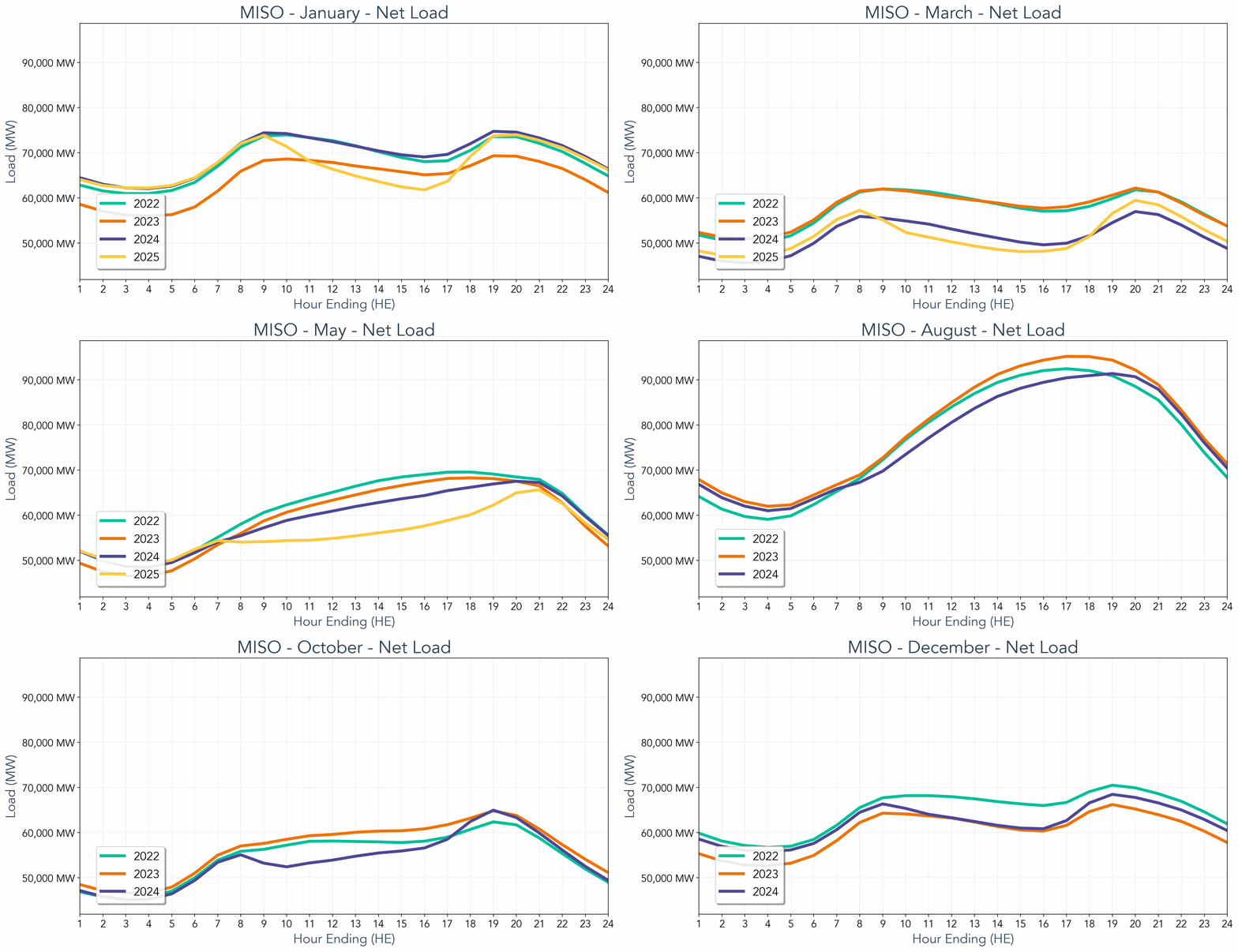
Some may be surprised to learn that IESO is a summer peaking ISO. The hottest and most humid days of July and August drive peak demand, as air conditioning load across the densely populated Greater Toronto Area pushes the system to its limits.
Of course, Canada gets cold, too. Cold, windy winters and hot, humid summers both stress the grid from opposite ends of the demand curve. Moreover, shoulder seasons can be deceptively volatile, with large fronts moving through quickly and severe weather possible across multiple zones simultaneously.
Solar generation remains a relatively small contributor compared to other markets partly for this reason. Ontario's cloud cover, limited roof-space economics relative to sunnier US states, and the existing depth of nuclear and hydro capacity have slowed distributed solar penetration. Wind is the primary renewable source beyond hydro, and its footprint continues to grow especially in the southwest.
As a result, real-time price volatility is still quite high in IESO, despite high levels of baseload generation and stable day-ahead prices, and generally high DA/RT alignment. Weather-related load and generation forecast misses, along with isolated demand spikes and generator outages, can lead to extreme real-time swings in net load and prices.
Amperon's IESO Coverage
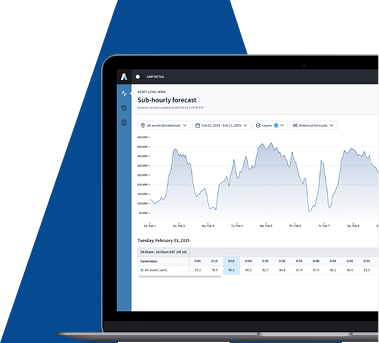
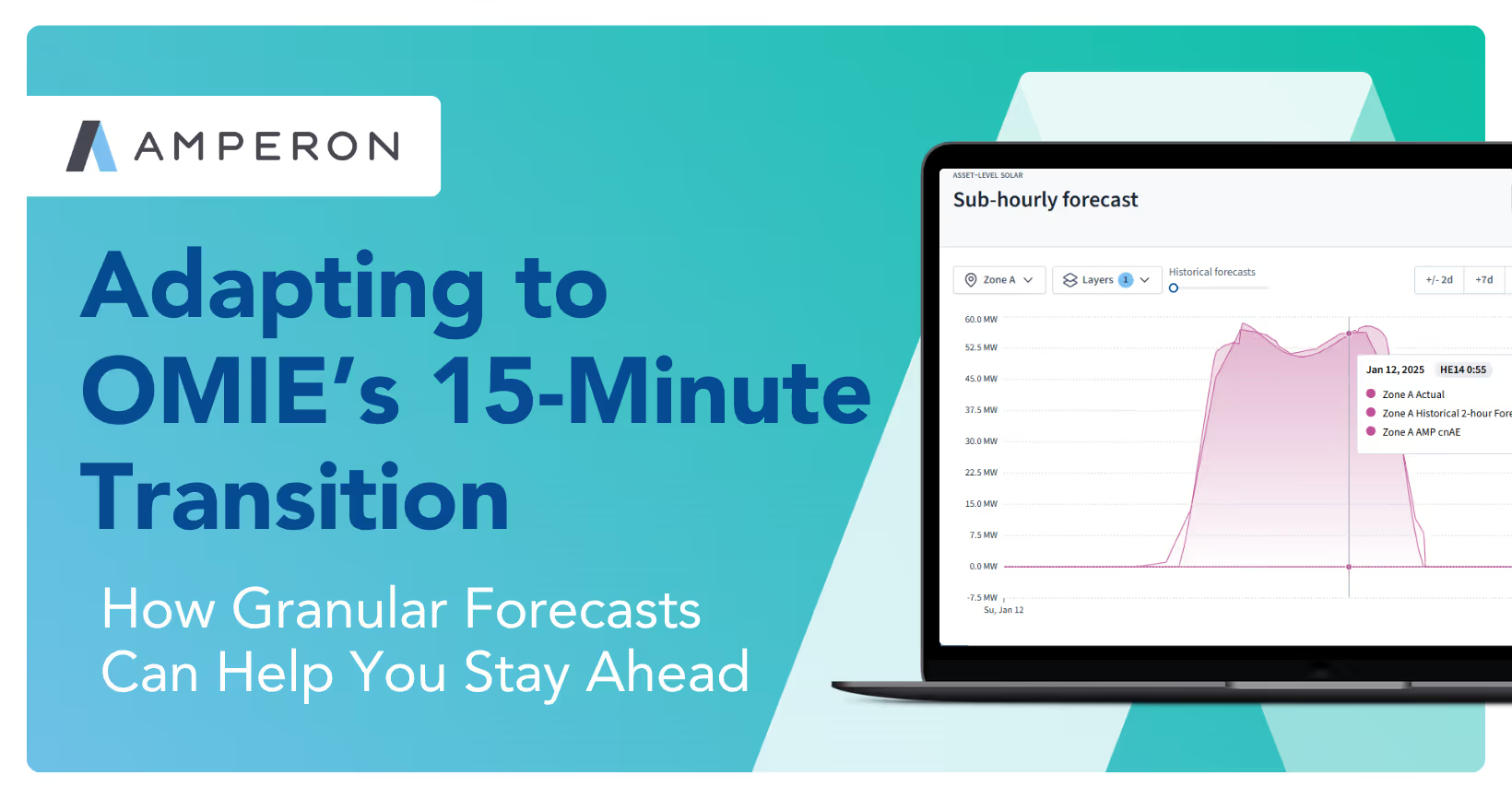
Amperon recently launched its IESO 14-day demand and net demand forecast, available down to the zonal level.
If you are tracking Ontario load and want a longer planning horizon than IESO's own published outlook, explore Amperon's Power Markets Trading solutions.

.svg)







































%20(3).png)
%20(2).png)
%20(1).png)






.png)


.avif)




.avif)
.avif)

.avif)

.avif)
%20(15).avif)
.avif)


.avif)

.avif)
.avif)