

In 2022, the Russia-Ukraine war reshaped Europe’s energy landscape. Germany—Europe’s largest energy consumer—was among the countries most challenged by the fallout. Nearly 55% of its natural gas imports came from Russia. When those supplies dropped, energy prices spiked across Europe, with many markets averaging over €200/MWh.

Source: ENTSOE
The summer was especially volatile. August 2022 was Europe’s hottest month on record, and prices swung sharply: in Germany, day-ahead prices ranged from €13.29/MWh to €871/MWh; in France, from €76 to €1,021. In the Baltics, hourly prices even hit €4,000/MWh. These swings pressured households and industry, forcing countries to stabilize supplies quickly..
Yet Germany adapted more efficiently than many expected thanks to advanced transmission networks, diversified imports, and rapid renewable growth—a combination that kept the system stable despite high prices.
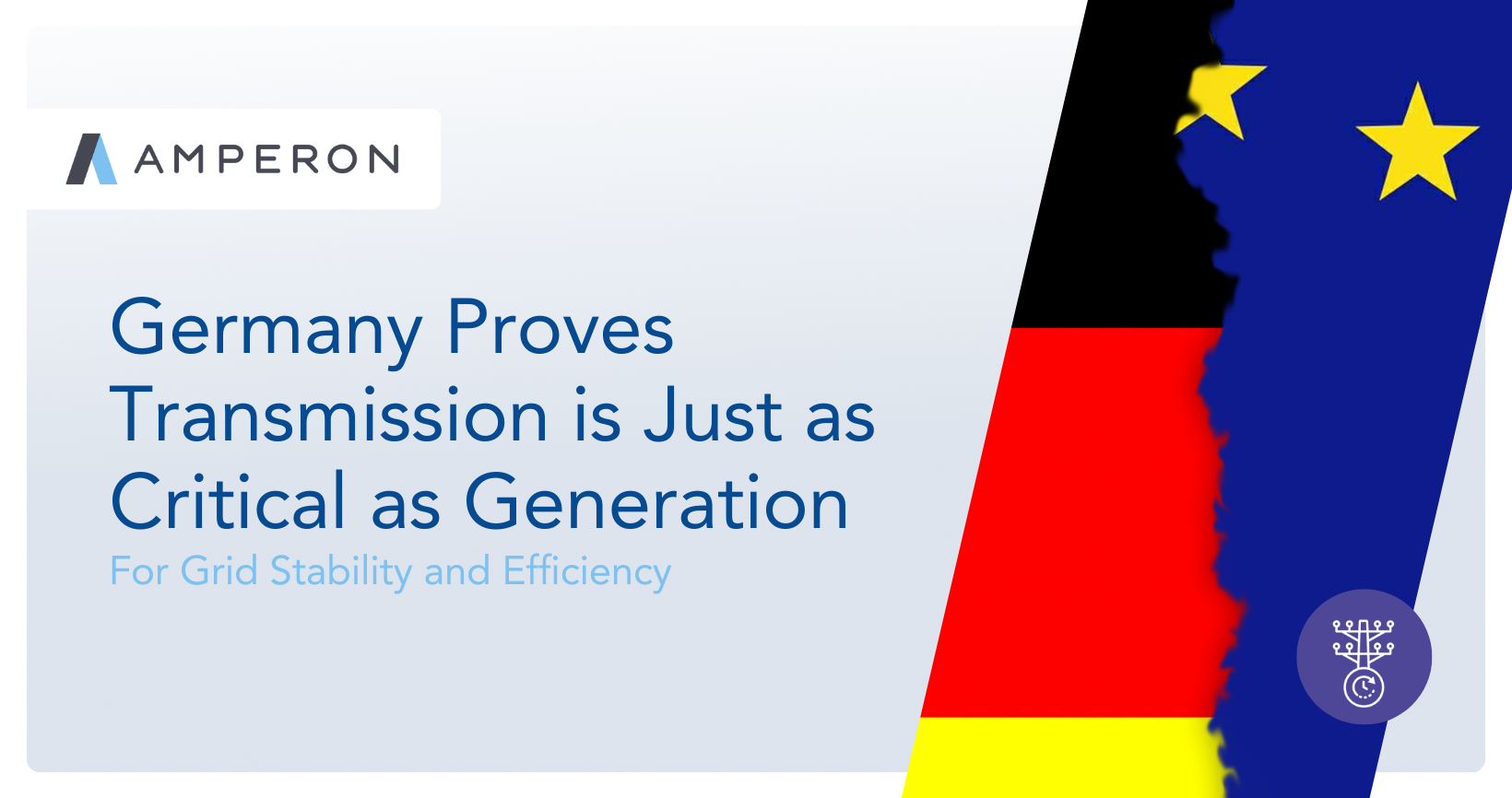
Germany’s transmission network is among Europe’s most interconnected, linking the country to 11 neighbors. In 2024, Germany imported a net 24.9 TWh of electricity, primarily from France, Norway, and Denmark.
Germany’s transmission network is among Europe’s most interconnected, linking the country to 11 neighbors
Cross-Border Flows Only Work with Adequate Domestic Transmission
Surplus power from northern wind belts or southern solar hubs must reach demand centers without bottlenecks. Germany’s grid smooths fluctuations, prevents congestion, and helps contain price volatility—proving transmission is as critical as generation.
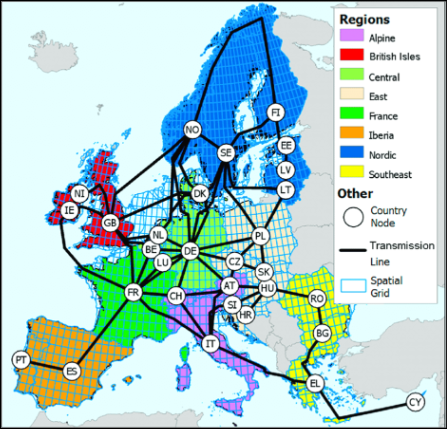
Source: ResearchGate
By contrast, Italy highlights the cost of limited interconnection. Germany’s position as a central hub gives directly linked countries access to more flexible and lower-cost power. Italy’s lack of direct connection limits that advantage. Despite progress on renewables, its constrained grid has kept energy costs among the highest in Western Europe.
Transmission’s importance grows further when paired with storage and LNG imports. Gas storage, LNG terminals, hydro reservoirs, and pumped storage act as shock absorbers—storing energy when supply exceeds demand and releasing it during peaks. Since 2022, Germany has increased LNG imports and rapidly scaled battery storage, which reached 19 GWh in 2024, putting the country on track for its 100 GWh target by 2030.
Renewables Have Been Central to Germany’s Resilience
Solar power surged in 2024, with 16.2 GW added and total capacity nearing 100 GW –generating roughly 72 TWh, or 14% of electricity supply. Between 2022 and 2025, average August peak-hour solar output rose from 26 GW to over 39 GW. Wind power growth complements this surge.
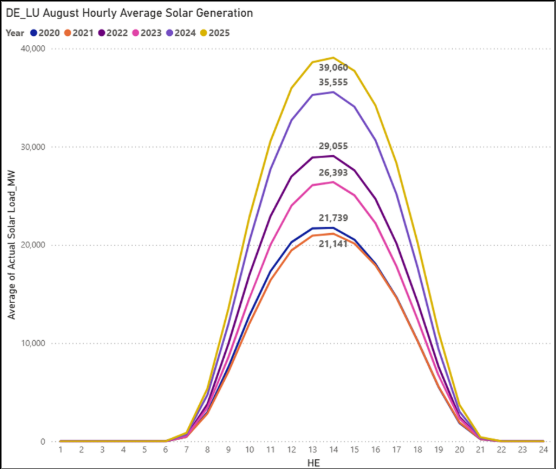
But generation alone isn’t enough—without strong transmission infrastructure, regions with excess supply can’t support those with deficits, driving local price pressure.
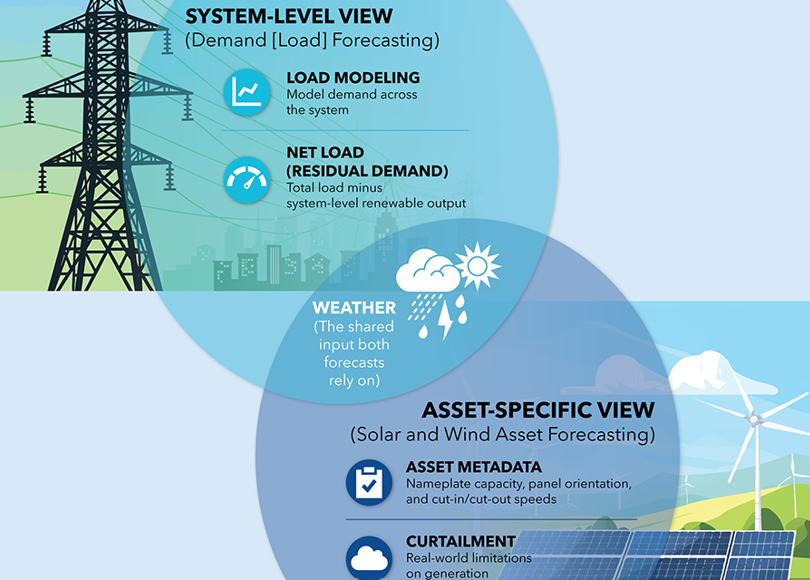
More renewables have also changed short-term market dynamics. Zero or negative prices now appear more often when supply exceeds demand. This challenges traditional generators but creates opportunities for flexible players like storage operators, demand response providers, and traders. High-quality forecasting becomes essential to anticipate rapid swings and respond strategically.
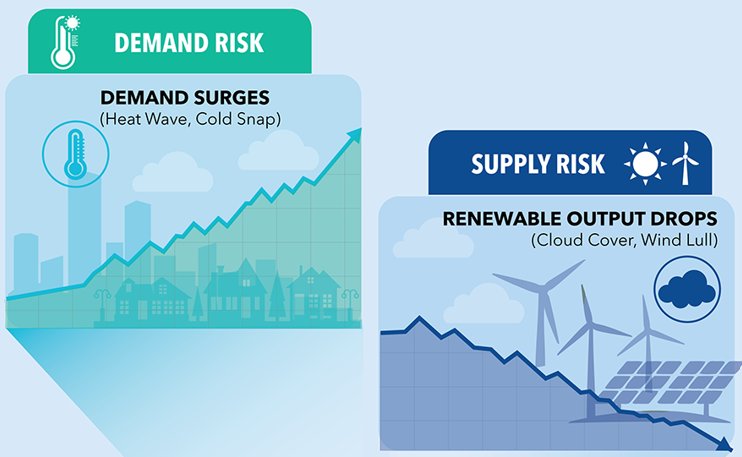
Forecasting has become a pillar of energy security. Predicting when solar or wind may underperform or when demand will spike helps operators plan imports, manage storage, and activate reserves. A modern grid becomes an active stabilizer, maximizing resources while keeping costs in check.
Diversifying imports has also been essential. With Russian gas largely unavailable, Germany strengthened ties with Norway, Denmark, France, and the Netherlands. Domestic gas storage was replenished, and industry adopted demand management measures. These steps show how interconnected systems and strategic planning reduce energy risks during crises.
Interconnected systems and strategic planning reduce energy risks during crises.
Challenges remain. Germany continues to invest in grid modernization, interconnectors, and storage solutions. Projects like SuedLink and SuedOstLink will transport renewable power from northern generation hubs to southern demand centers. Without such infrastructure, congestion, curtailment, and higher local energy costs could undermine even a renewable-rich, import-diversified system., and higher local energy costs could undermine even a renewable-rich, import-diversified system.
The Russia-Ukraine war underscored the dangers of overreliance on a single energy source. Germany’s response—combining robust transmission networks, storage, diversified imports, forecasting, and renewable growth—demonstrates how energy security and cost management can coexist.
Generation alone isn’t enough—without strong transmission infrastructure, regions with excess supply can’t support those with deficits.
Why Forecasting Still Matters in an Interconnected Grid
Germany’s experience offers a roadmap for other nations navigating the transition to a renewable, reliable, and economically sustainable energy future. In a Europe increasingly powered by variable renewables, interconnected grids and forecast accuracy will together define resilience—ensuring stability, affordability, and a smoother path toward decarbonization.
It’s important to note that high levels of interconnectivity shift and mitigate risk but do not eliminate it—and can in fact make systems more sensitive to cross-border flows and synchronized demand patterns. In tightly coupled systems, misjudging supply or demand in one region can ripple across borders.
Accurate forecasts allow operators and market participants to anticipate these dynamics before they translate into price volatility or operational stress. As renewables continue to scale, forecasting becomes not just a tool for managing constraints, but a core pillar of system efficiency.
Finally, forecasting underpins the effective use of flexibility. Natural gas, energy storage, and demand response only deliver value when deployed at the right time. As negative pricing and rapid intraday swings become more common, forecast quality increasingly determines whether flexible assets stabilize the system or miss critical opportunities.
High levels of interconnectivity shift and mitigate risk but do not eliminate it—and can in fact make systems more sensitive to cross-border flows and synchronized demand patterns.
*References:
Zappa, William & Junginger, Martin & van den Broek, Machteld. (2019). Is a 100% renewable European power system feasible by 2050?. Applied Energy. 233-234. 1027-1050. 10.1016/j.apenergy.2018.08.109.

.svg)
























%20(3).png)
%20(2).png)
%20(1).png)




.png)


.avif)


.avif)
.avif)

.avif)
.avif)
%20(15).avif)
.avif)


.avif)

.avif)
.avif)



