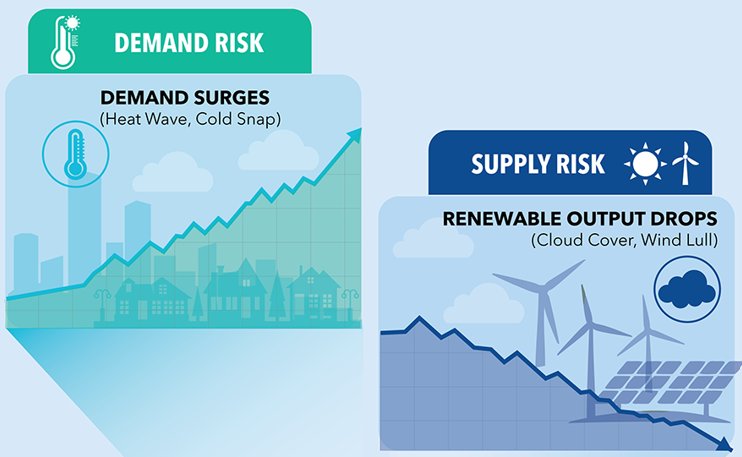
Much more so than traditional generation and load forecasts, wind and solar forecasts are tightly coupled to weather dynamics that can change extremely quickly. Small shifts in cloud cover, wind speed, or atmospheric conditions can materially impact generation across both time and space.
These resources also exhibit nonlinear behavior. Solar output ramps up and down sharply at sunrise and sunset. Wind generation can change abruptly around turbine cut-in and cut-out thresholds. This complexity is what makes short-term renewable forecasting both challenging and essential in modern power markets.
As the grid mix skews toward renewables, forecast errors become increasingly asymmetric, with small inaccuracies leading to outsized operational and financial consequences. Forecasting wind and solar output, therefore, becomes critically important for both utilities and independent power producers.
How Utilities and IPPs Use Wind and Solar Forecasts
Broadly speaking, utilities use renewable energy forecasts to manage net load and procurement risk, while independent power producers (IPPs) use them to optimize market performance.
While these use cases often rely on similar forecast inputs, they serve different market participants and decision-making objectives. Understanding how these needs differ helps clarify where short-term forecasting delivers the most value.
Net Load Forecasting for Utilities
Driven by data centers and electrification, utilities are preparing for a significant increase in system load over the next decade. Given this outlook, renewables have become an inevitability rather than an optional addition to the generation mix. In 2024 alone, solar generation grew 29% and wind output grew nearly 8% worldwide.
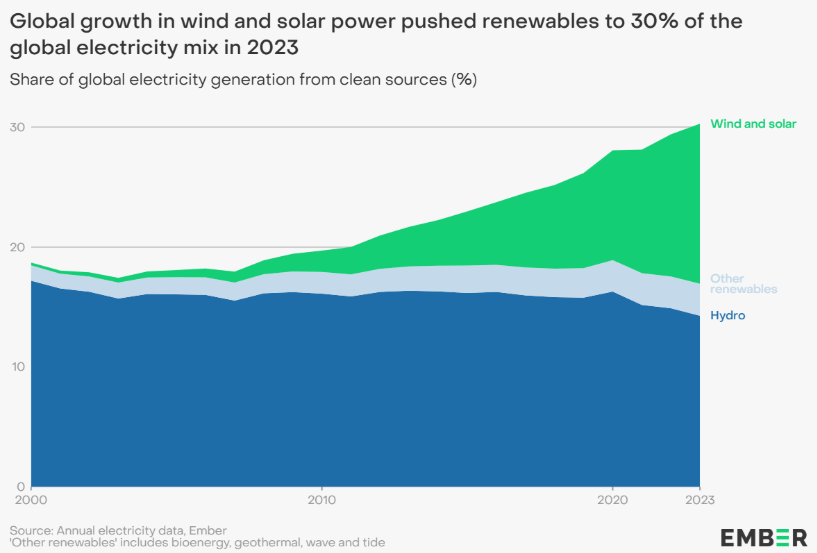
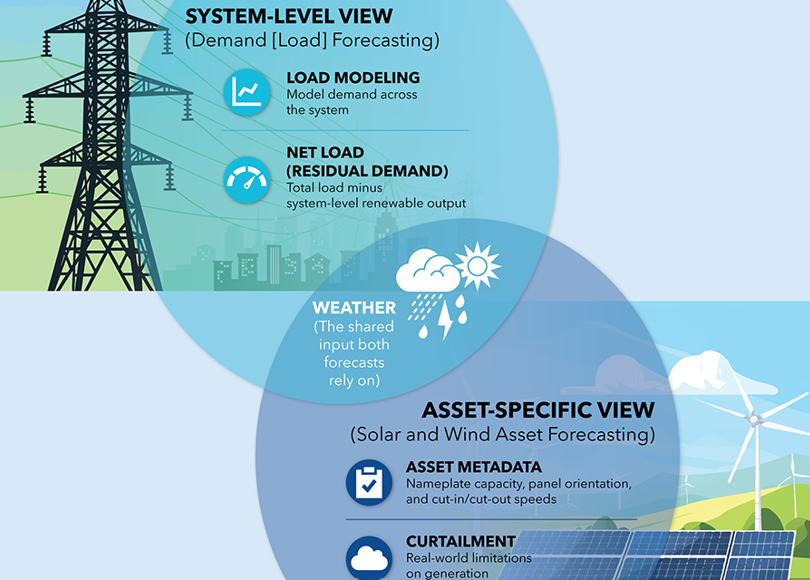
For utilities and other load-serving entities with wind and solar assets, net load forecasting is no longer just about predicting customer demand and the overall supply of renewables on the grid. It also requires explicitly modeling owned renewable generation so they can reliably and cost-effectively line up enough additional supply to cover expected net load.
In other words, utilities need visibility into both sides of the net load equation. Many utilities already rely on grid demand short-term forecasts, and pairing these with generation forecasts for owned assets provides complete net load visibility.
The consequences of inaccuracy are significant, as wind and solar forecast errors compound quickly. Overestimating renewable output can leave a utility short in the DA market and exposed to costly real-time purchases. Underestimating wind and solar output can lead to inefficient procurement decisions and missed opportunities.
Leading forecasts support multiple zones and rate classes within a utility's service territory, capturing geographic and temporal variations in both demand and distributed generation. This granularity helps utilities optimize resource adequacy planning as well as short-term supply planning and battery dispatch, helping ensure sufficient capacity to reliably meet peak demand at the lowest possible cost.
Day-Ahead Optimization for IPPs
Independent Power Producers approach short-term forecasting from a different perspective. Unlike utilities, IPPs typically have no obligation to serve load. Some operate assets under fixed-price power purchase agreements, which reduce risk but cap upside.
For other IPPs—especially those with large, well-located projects—actively participating in DA and RT markets can generate higher long-term returns. For these producers, short-term renewable energy forecasting is central to DA bidding strategy.
Submitting offers requires a clear understanding of expected generation and associated uncertainty. If an asset under-delivers relative to its DA offer, the shortfall must be purchased in the real-time market, where prices can be highly volatile. If it over-delivers, excess generation must be sold at real-time prices, which may be lower than DA prices.
Both outcomes carry risk as well as opportunity. The ability to accurately forecast short-term wind and solar production—and to account for uncertainty when forming DA bids—can materially impact profitability. In this context, forecasting accuracy is not just an operational advantage; it is a competitive one.
Wind and solar forecasts enable IPPs to minimize exposure to real-time market volatility while maximizing revenue opportunities. They also support optimal battery dispatch strategies, helping operators decide when to charge, discharge, or hold based on expected renewable output and market conditions.
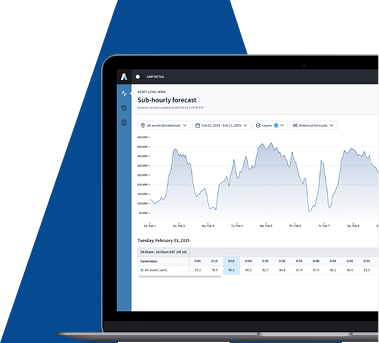
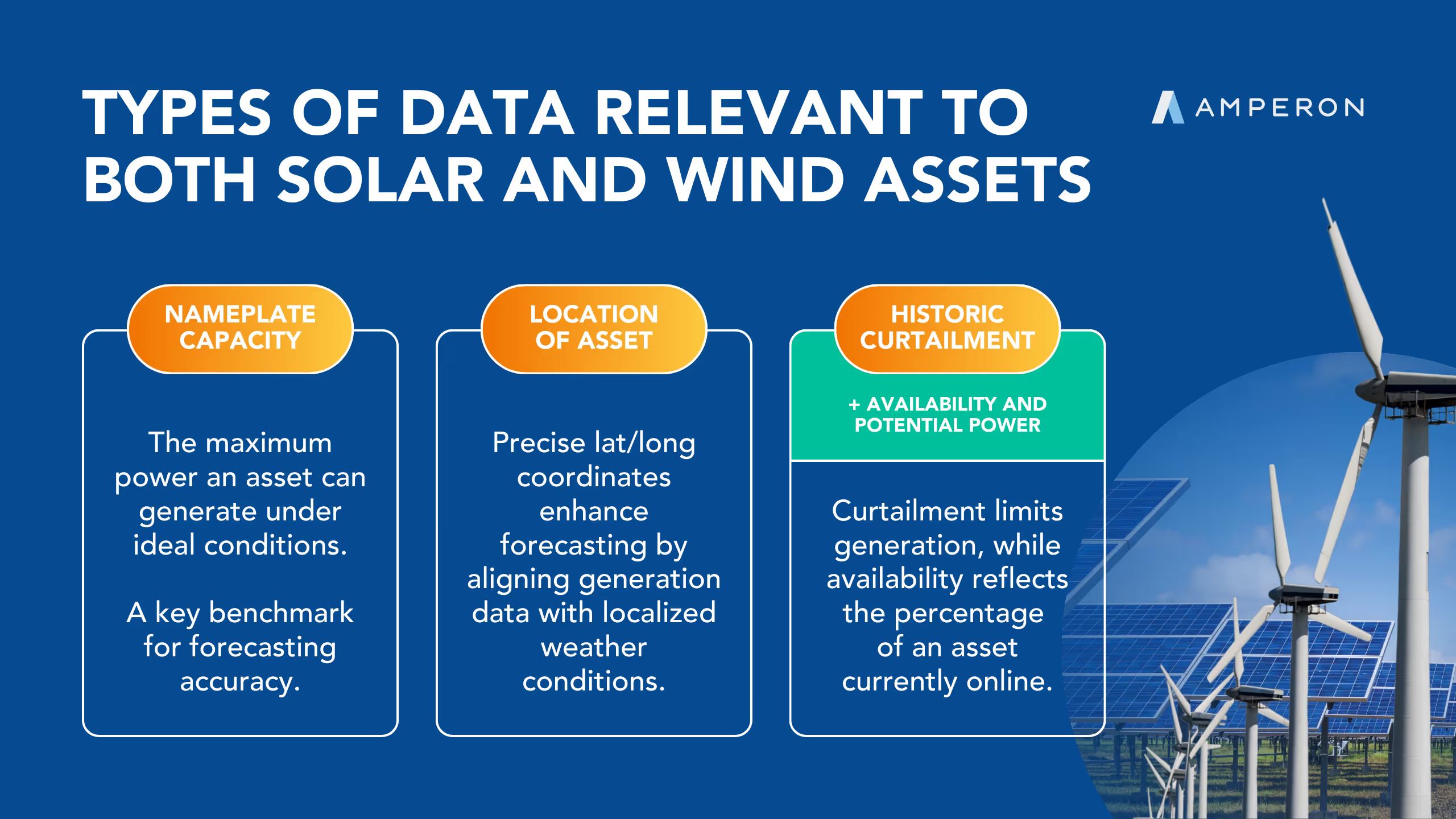
Leading forecasts provide sub-hourly and hourly wind and solar generation forecasts for individual assets globally. Some forecasts combine physics-based models—capturing variables like solar azimuth, tracking systems, and wind turbine cut-in/cut-out speeds—with machine learning that adapts to operational realities like equipment degradation, inverter malfunctions, panel soiling, and obstructions.
Weather inputs should be localized to each asset's exact coordinates, capturing hyper-local conditions that drive short-term variability. Curtailment and outages should be handled intelligently: when asset owners provide operational data, the models should exclude non-representative periods from training. Where such data isn't available, models should automatically identify and remove anomalous underperformance.
Learn more about Asset Management and Optimization.

.svg)








































%20(3).png)
%20(2).png)
%20(1).png)





.png)


.avif)



.avif)
.avif)

.avif)

.avif)
%20(15).avif)
.avif)


.avif)

.avif)
.avif)