

For decades, long‑term load forecasting existed quietly in the background of utility planning processes. Over the last few weeks, that has all changed in the nation’s largest grid.
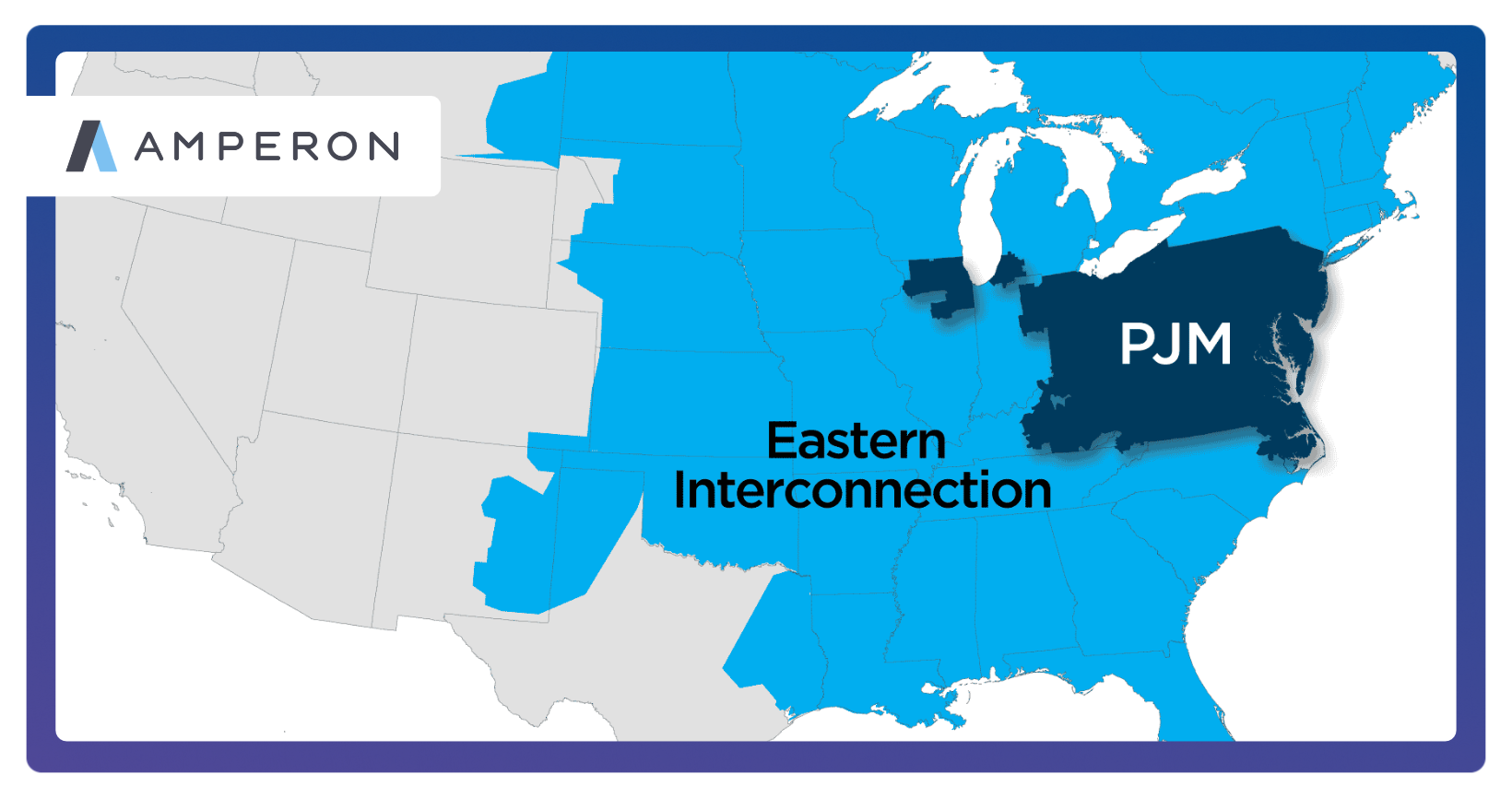
PJM’s capacity market has been under mounting stress, but recent auction results have made the problem impossible to ignore. This has turned load forecasting into dinner table conversation for many of the region’s 67 million electric customers.
The 8-Fold Path of PJM’s Capacity Prices
After years of relatively modest prices, PJM's 2025/2026 Base Residual Auction marked a breaking point, clearing at over $269/MW-day. That was a more than 800% increase from just a year earlier.
That historic surge prompted PJM to introduce temporary price ceilings and floors, setting the ceiling at $325/MW-day for the 2026/2027 and 2027/2028 auctions. Yet the market ignored that limit, clearing at $329 for 2026/2027 and $333 for 2027/2028.
Even the maximum allowable price is no longer sufficient to attract enough capacity—to the tune of a 6.6 GW shortfall.
And because the capacity auction occurs three years before the delivery year, higher-than-expected demand, interconnection delays, and unforeseen retirements can create further shortfalls between the committed capacity and actual system needs.
To put it bluntly, the market has failed to meet forecasted reliability needs. Power plants take longer to build than data centers, and markets have been ill equipped to handle that fundamental mismatch.
The 3-Fold Response from the White House, PJM, and FERC
The White House: This dilemma prompted the White House and a bipartisan group of governors to push the grid operator to hold an emergency capacity auction. The plan asks large tech companies to sign 15-year contracts for new generation, providing developers the certainty they need to finance new power plants while giving data centers firm access to much-needed power.
PJM: PJM’s Board also laid out a set of actions to better manage large loads like data centers while trying to keep the system reliable and affordable. They will be exploring market reforms, better load forecasting, faster interconnection reviews, and options for data centers to bring their own generation under a connect and manage approach.
FERC: On top of that, FERC issued an order on colocation that requires PJM to revisit its tariffs and submit a reliability assessment on how it treats co-located load, adding to the urgency to clarify rules and bolster the mechanisms for guiding long-term investments.
These three distinct policy responses are all reacting to the same problem: the system is being planned around demand that is highly uncertain. Even with all these interventions, PJM’s traditional, 1-year-at-a-time forward capacity market struggles to keep pace with rapid, concentrated load growth.
To say nothing of ERCOT’s market design, which has no capacity market at all.
Why Data Centers are at the Center of the Problem
The pressures behind repeated price cap hits are closely tied to concentrated and growing load. Many factors like population growth, electrification, and commercial development all contribute to rising demand across PJM, but data centers grab the headlines for their outsized impact.
Data centers accounted for roughly 45% of the $47.2 billion in total capacity costs in the last three auctions. This concentrated, high-demand load adds significant pressure across PJM’s grid and capacity markets, driving capacity prices higher and amplifying scarcity signals—making it more likely for auctions to hit or exceed the regulatory ceiling.
Just five years ago, PJM was forecasting 0.3% annual load growth over ten years. Today, summer peak load growth is forecasted to average 3.6% per year, driven mostly by data centers. That kind of growth is not just bigger; it is also harder to predict.
Meeting the Moment: The Evolution of Load Forecasting
Traditional forecasting methods were not built for loads that arrive in large chunks and on uncertain timelines. As such, the nature of a good forecast is changing.
It is no longer enough to publish a single number. Market participants and regulators want to know how confident the forecast is, what assumptions are driving it, and how it changes if a data center is delayed or never built.
To meet the moment, forecasting is evolving. Machine learning methods are fusing with traditional physics-based load models to continuously account for changing market dynamics. Moreover, probabilistic forecasting methods have made it possible to model risk explicitly, illuminating not just what’s possible, but what’s probable.
As forecast risk increasingly drives both price escalation and reliability concerns, grid operators and market participants need forecasts that take uncertainty seriously. Such forecasts are quickly moving from the back office into the spotlight.
Until interconnection timelines shorten, retirements slow, and new market mechanisms are implemented, policy interventions and emergency capacity procurements may keep happening in PJM and beyond. In the meantime, accurate load forecasts are critical to keeping the grid reliable and guiding future investment.

.svg)















































%20(3).png)
%20(2).png)
%20(1).png)






.png)


.avif)




.avif)

.avif)

.avif)

.avif)
%20(15).avif)

.avif)


.avif)


.avif)



