Chile’s electricity market underwent a major shift in 2025 with the implementation of new mandatory forecasting requirements for renewable generators. Now that the rules are in place, operators are starting to see how these changes affect day-to-day operations, data workflows, and interactions with the system operator. While enforcement is still in its early stages, the direction is unmistakable: hourly probabilistic forecasting has become a central operational requirement, particularly for wind and solar generators.
Chile is Reclaiming its Role as an Energy Market Leader
Chile was one of the first countries in the world to liberalize their power markets in the early 1980s, but evolutions have stalled since then. Now they are modernizing again with the introduction of new forecasting requirements.
With these and other reforms, Chilean market participants can expect transmission constraints and market efficiency to improve over time, but they can also expect increased reporting pressures.
48-Hour Forecasts Now Required for All Generators
One of the most significant changes that took effect in October was the requirement that all generators submit a 48-hour generation forecast to the system operator, known as the Coordinator.
As published here, these forecasts must:
- Follow the submission standards outlined in Article 2-72,
- Match the temporal resolution used in the first day of the PID horizon, and
- Include exceedance probability values for P25, P50, and P75.
For many generators, this structure simply formalized practices they had already been following informally. But for others—especially smaller or less automated operators—it created new expectations around modeling infrastructure, data quality, and repeatable forecasting processes.
Elevated Requirements for Wind and Solar
Wind and solar generators faced a more specialized workflow under Article 2-88. These facilities are now required to submit a 48-hour probabilistic forecast, including P25, P50, and P75 at every hour to the grid operator. On top of this, each asset owner must submit a probabilistic forecast going out 10 consecutive days each day at 8:00, starting at 0:00 of the next day going out 10 consecutive days.
This structure goes beyond simply generating a 48-hour outlook—it imposes a consistent modeling cadence and establishes clear expectations for how renewable forecasts should be built, documented, and delivered.
No Penalties Yet, but Expectations Are Rising
Even though the requirements have gone into effect, the first month has been treated as a soft rollout. Operators are not yet penalized for failing to submit forecasts or for missing accuracy thresholds, and regulators have not finalized whether additional quantiles beyond P25/P50/P75 will eventually be required.
Still, operators generally understand that this is the beginning of a transition. The system operator is collecting data, evaluating baseline performance, and preparing the foundation for a more robust compliance framework in the future.
Accuracy Monitoring Begins: MAE and RMSE on P50
One of the most notable developments in the first month of implementation has been the start of accuracy monitoring. The Coordinator is evaluating each generator’s performance using MAE and RMSE relative to the P50 forecast. Although these metrics are not tied to penalties today, they’re already influencing how operators think about their forecasting infrastructure.
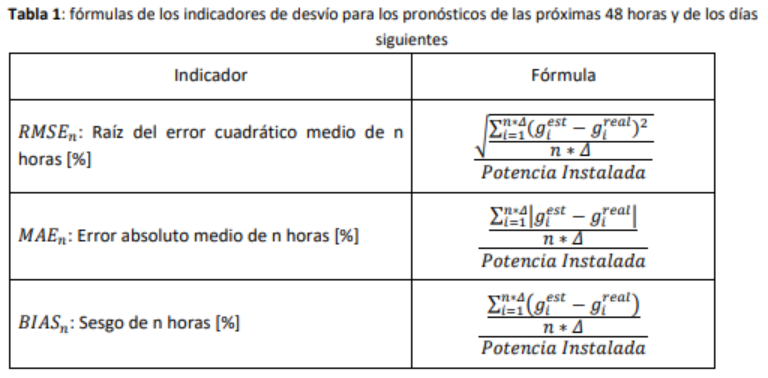
These variables refer to:
- gi_est: Forecasted expected generation (P50) for interval i, in MWh.
- gi_real: Actual or available generation for interval i, using pre-curtailment expected output when curtailment occurs.
- n: Total number of hours in the evaluation period.
- Delta: Number of data points per hour (e.g., 4 for 15-min, 12 for 5-min, and 1 if using hourly data).
- Potencia instalada: Installed capacity of the facility (maximum possible output).
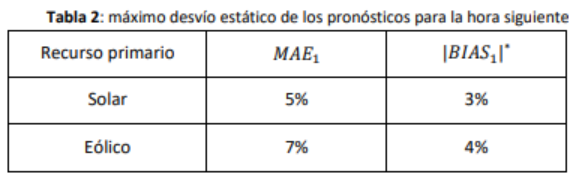
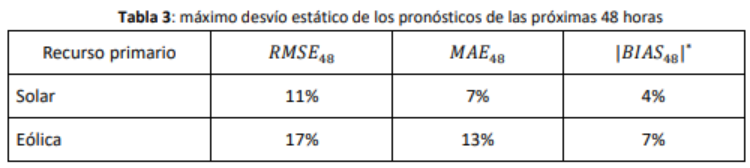
Coordinator’s expected accuracy values for solar and wind forecasts for the next 48 hours.
Even in this early phase, generators are motivated to maintain strong accuracy to build trust, avoid operational friction, and position themselves well ahead of any future enforcement policies.
How Amperon Is Supporting Operators in This Transition
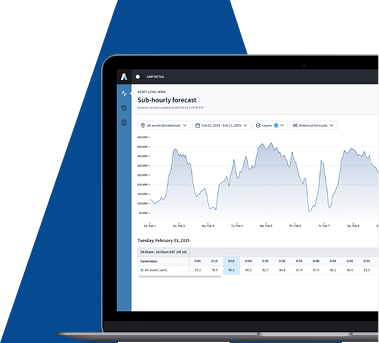
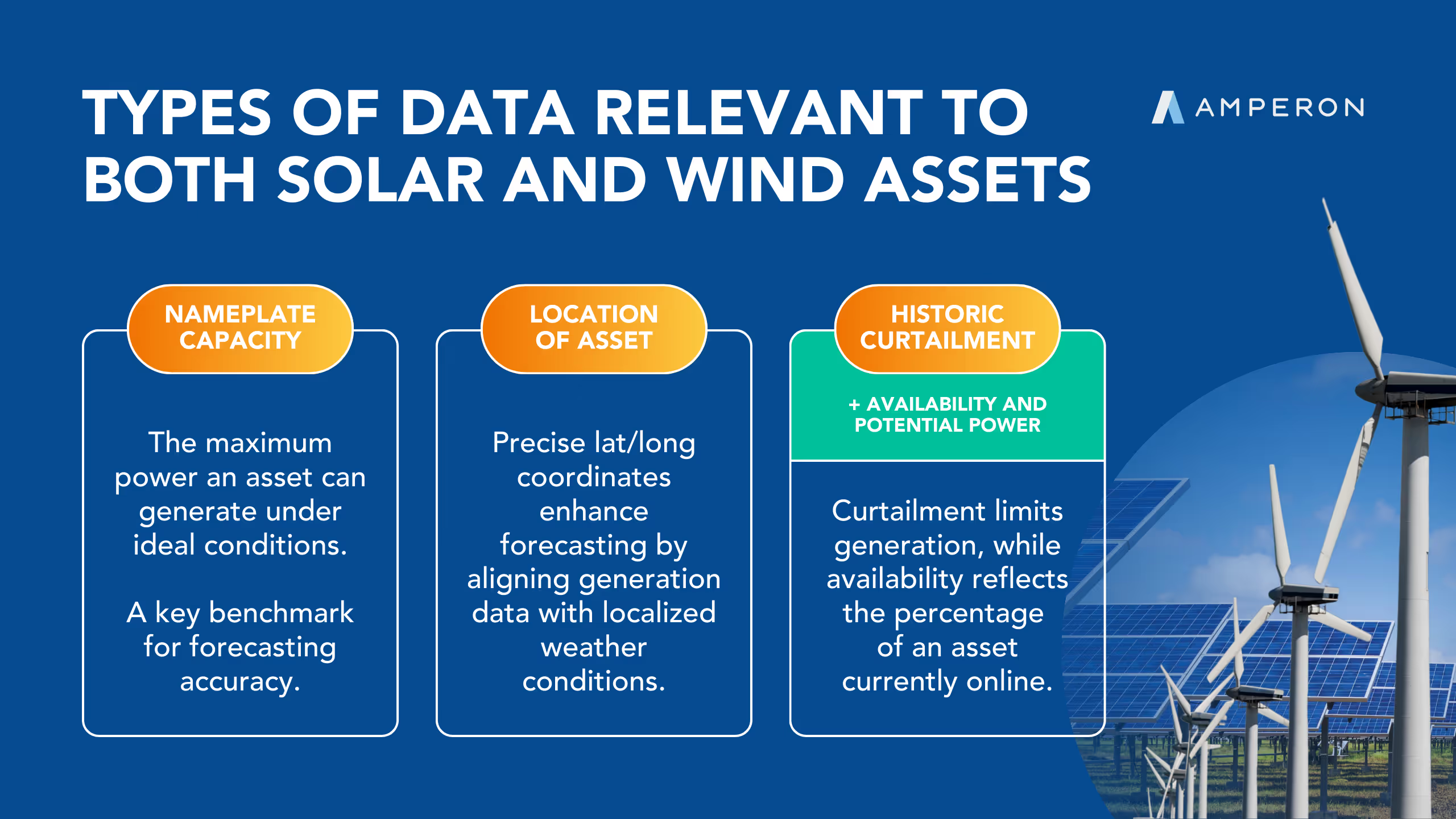
Operators using Amperon have access to 14-day, asset-level wind and solar forecasts—far longer than the required 48-hour submissions. This extended horizon has proven especially valuable over the past month as operators plan maintenance outages, anticipate curtailment exposure, and coordinate with co-located BESS.
Amperon also delivers forecasts at whatever granularity operators need, from hourly to sub-hourly, ensuring that submissions match the Coordinator’s resolution without requiring reprocessing.
Most importantly, the platform’s accuracy—driven by proprietary machine-learning models—aligns with the Coordinator’s emerging MAE and RMSE tracking. As accuracy becomes a more prominent part of regulatory oversight, operators using Amperon are positioned to stand out on performance from the start.
Looking Ahead: Early Days of a Larger Transformation
After a month of the new rules being in place, one thing is clear: Chile is laying the foundation for a more mature, forecasting-driven electricity market. While enforcement is still light, the structure is there, and operators expect that penalties or stricter standards may follow once the Coordinator completes its initial data collection phase.
In this early transition period, investing in high-quality forecasting tools isn’t just about compliance—it’s about building operational resilience, improving grid interactions, and staying ahead of a regulatory curve that is clearly steepening. As Chile moves further into its renewable-heavy future, forecasting has become one of the system’s most important levers for reliability and performance.
As in decades past, other energy markets throughout Latin America and beyond are likely to follow Chile’s lead. Solar and wind operators worldwide would be wise to stay ahead of the curve.
Learn more about Amperon’s solar and wind generation forecasts here.

.svg)














































%20(3).png)
%20(2).png)
%20(1).png)






.png)


.avif)




.avif)

.avif)

.avif)

.avif)
%20(15).avif)
.avif)


.avif)

.avif)