

California has long been the pioneer of grid-scale batteries. The story began in 2013, when CAISO brought online its first utility-grade project: a modest 1.85 MW installation at Vaca-Dixon. It didn't look like much, but it marked the start of a transformation in how the West managed power and laid the groundwork for large-scale energy storage in the U.S.
Fast-forward a decade, and California's battery fleet exploded. From about 500 MW in 2020, the system grew to 11,200 MW by June 2024, reaching 13,000 MW by December 2024. That meant CAISO had enough battery capacity to equal about one-quarter of its record system peak load (~52 GW).
Batteries became a central pillar of grid reliability, helping manage evening ramps, smooth renewable integration, and meet summer demand spikes. As of mid-2026, CAISO's capacity has grown to 17,023 MW, further increasing its coverage relative to grid size — still roughly 33% of its system peak.
Batteries became a central pillar of grid reliability, helping manage evening ramps, smooth renewable integration, and meet summer demand spikes.
At the start of 2024, California was still the undisputed battery leader, with 7.3 GW installed, while Texas's ERCOT lagged behind at 3.2 GW. But ERCOT has been expanding rapidly, investing heavily in large-scale storage.
CAISO was the first to show how batteries could be stitched into the heartbeat of grid operations. ERCOT soon began following that same arc. Its new RTC+B market design rewrote how storage interacts with the system, treating batteries as a unified, co-optimized resource in real-time dispatch rather than a split personality of load and generation. In other words, where CAISO demonstrated the concept, ERCOT industrialized it—hard-wiring storage directly into the control room.
CAISO was the first to show how batteries could be stitched into the heartbeat of grid operations.
In Q2 2025, ERCOT briefly surpassed CAISO in total installed battery capacity, marking a milestone for the Texas grid. It's a tight race – in raw megawatts, ERCOT is neck and neck, but California still leads in relative coverage of grid demand, showing the difference between sheer capacity and meaningful impact on system reliability. California proved that large-scale batteries could work at scale. Texas is proving they can grow fast, even on a larger, more energy-hungry grid.
In Q2 2025, ERCOT briefly surpassed CAISO in total installed battery capacity, marking a milestone for the Texas grid.
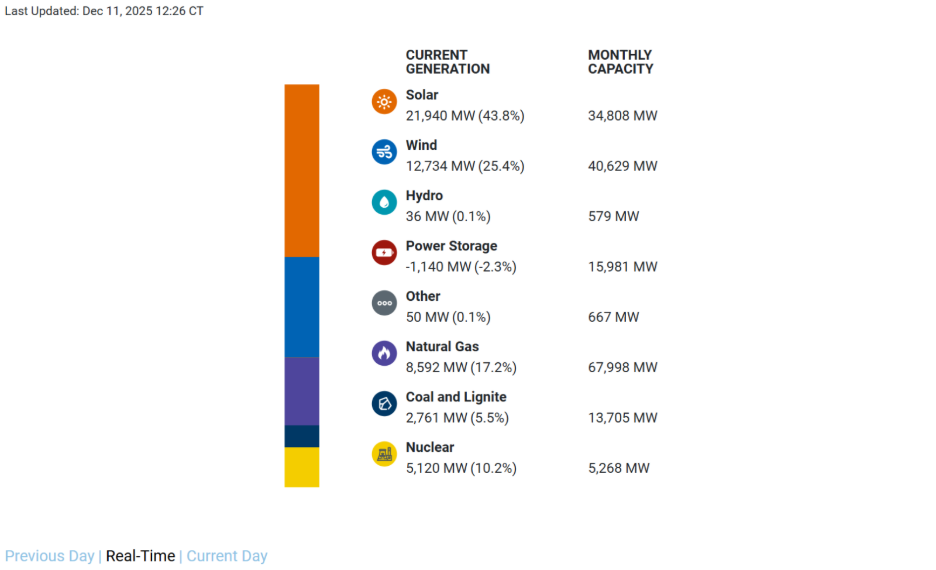
As of ERCOT's most recent resource adequacy outlook, ERCOT's battery fleet has grown to 20,948 MW. With a new all-time peak load record of 91,089 MW set in July 2026, batteries now cover roughly 23% of ERCOT's peak.
Looking ahead, both regions are key to America’s energy transition. California plans 52,000 MW of storage by 2045, pushing the limits of what batteries can do to balance renewable energy and stabilize the grid. ERCOT, meanwhile, continues its rapid growth, demonstrating how storage deployment scales under high demand and diverse weather conditions.
It's a relay, not a rivalry. CAISO led the first wave of America's battery buildout. ERCOT is driving the next, at record speed. And with both pushing limits, the U.S. battery race is tighter than ever.
What The Battery Race Means for the Rest of North America’s ISOs
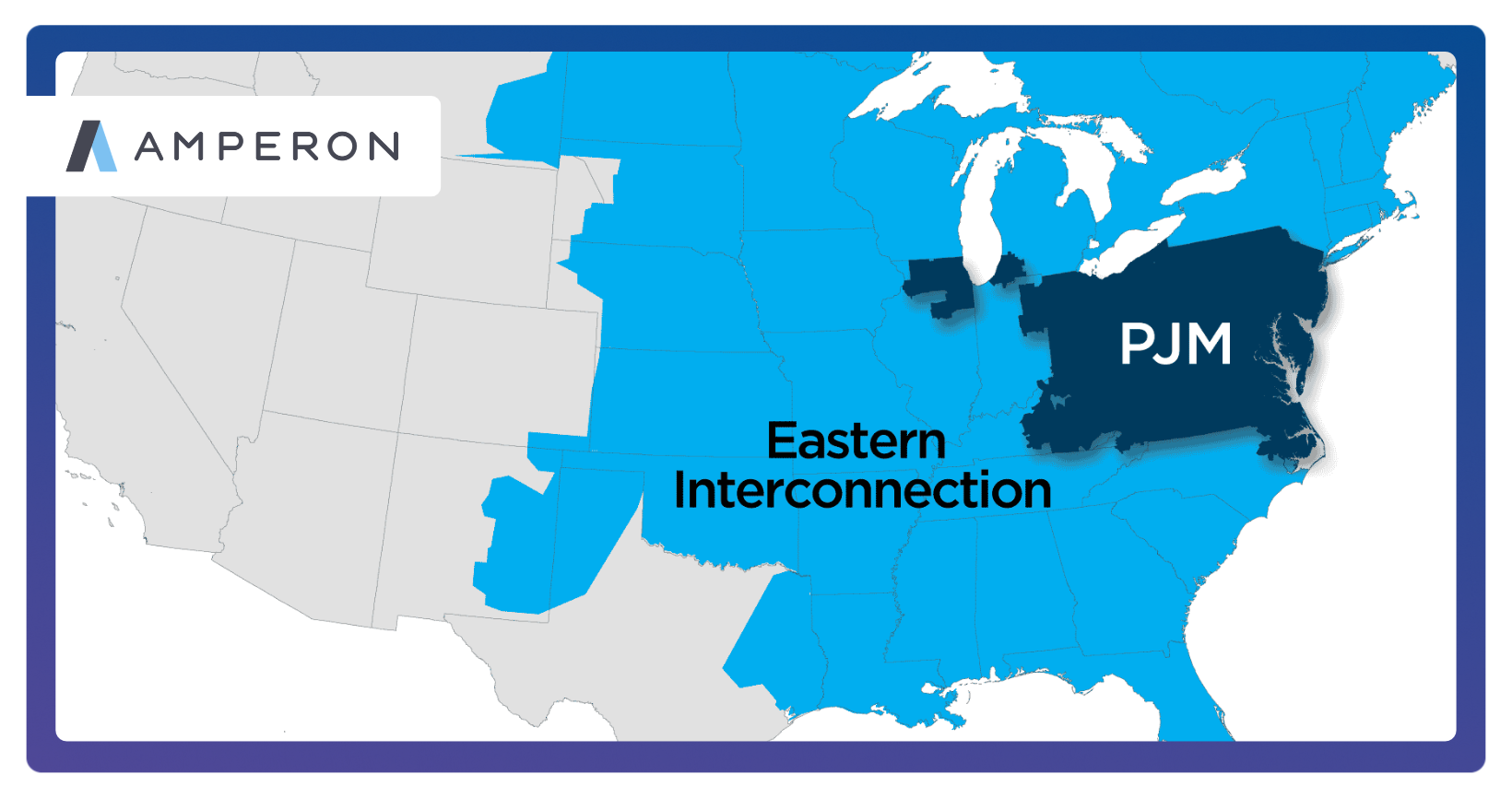
The story doesn’t stop in California and Texas. As these two markets redefine what battery storage looks like at scale, the rest of North America’s ISOs can’t help but feel the momentum at their backs. CAISO proved that batteries could be woven into the fabric of daily grid operations. ERCOT proved that they could scale faster than almost anyone expected. And now, every other ISO—from PJM to MISO to NYISO and ISONE—finds itself standing at a new kind of starting line.
Across other ISOs, storage had been growing steadily but cautiously, treated as a helpful tool rather than a core pillar. CAISO’s evening-ramp strategy and ERCOT’s blistering buildout changed that outlook: storage isn’t a supporting actor anymore. It’s the technology that defines how flexibly, how cleanly, and how reliably a modern grid can run.
Storage isn’t a supporting actor anymore.
That shift is rippling outward:
- PJM, the nation’s largest electricity market, is rethinking how batteries bid into capacity and energy markets.
- MISO is grappling with accelerating coal retirements and beginning to treat storage as a bridge to maintain reliability through the transition.
- SPP and NYISO are watching what happens when volatility meets real storage volume—and are modeling their future systems around batteries rather than traditional generation.
- Even ISONE, long constrained by limited interconnection and winter reliability risks, is exploring how fast-response storage can cushion the system during extreme cold snaps.
Each region will move differently. They have different weather, regulatory structures, and resource mixes. But the lesson they’re all absorbing is the same: the ceiling on batteries is much higher than anyone believed a decade ago, and the first two phases led by California and Texas, have given everyone else a clearer map of what comes next.
So the relay baton keeps moving. CAISO took the first lap, ERCOT is sprinting through the second, and the rest of North America’s grids are lining up for their turn. What started as a California experiment is now a continental shift in how power is balanced, delivered, and secured.
What started as a California experiment is now a continental shift in how power is balanced, delivered, and secured.
The battery race is tighter than ever, and it's expanding. And the next breakthroughs may come not from the pioneers, but from the ISOs now preparing to run their own leg of the race.

.svg)





































%20(3).png)
%20(2).png)
%20(1).png)






.png)


.avif)


.avif)
.avif)

.avif)
.avif)
%20(15).avif)

.avif)


.avif)

.avif)



