Most utilities have two anchors for planning: a reliable short-term forecast from 0-14 days, and a long-range climatological view that informs IRP filings and multi-year capacity decisions.
Historically, there’s been a major gap between those two horizons, which most teams navigate with historical norms and seasonal averages. These averages tell you what has happened before, not what actual weather forecasts suggest is coming.
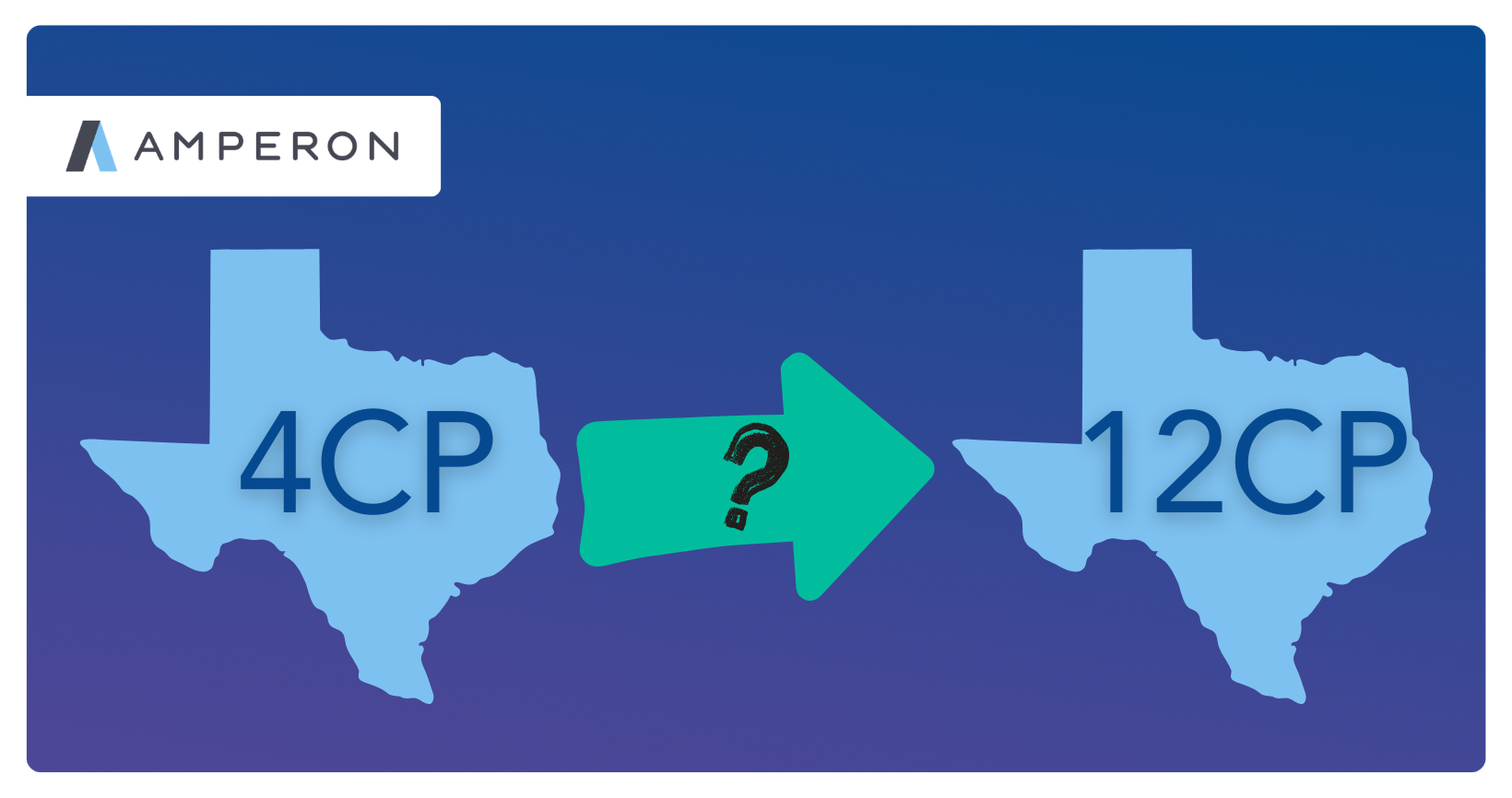
The gap from 15 days to seven months is consequential, especially in the sub-seasonal time horizon. It’s where forward hedges get sized, maintenance outages get scheduled, and reserve decisions get locked in.
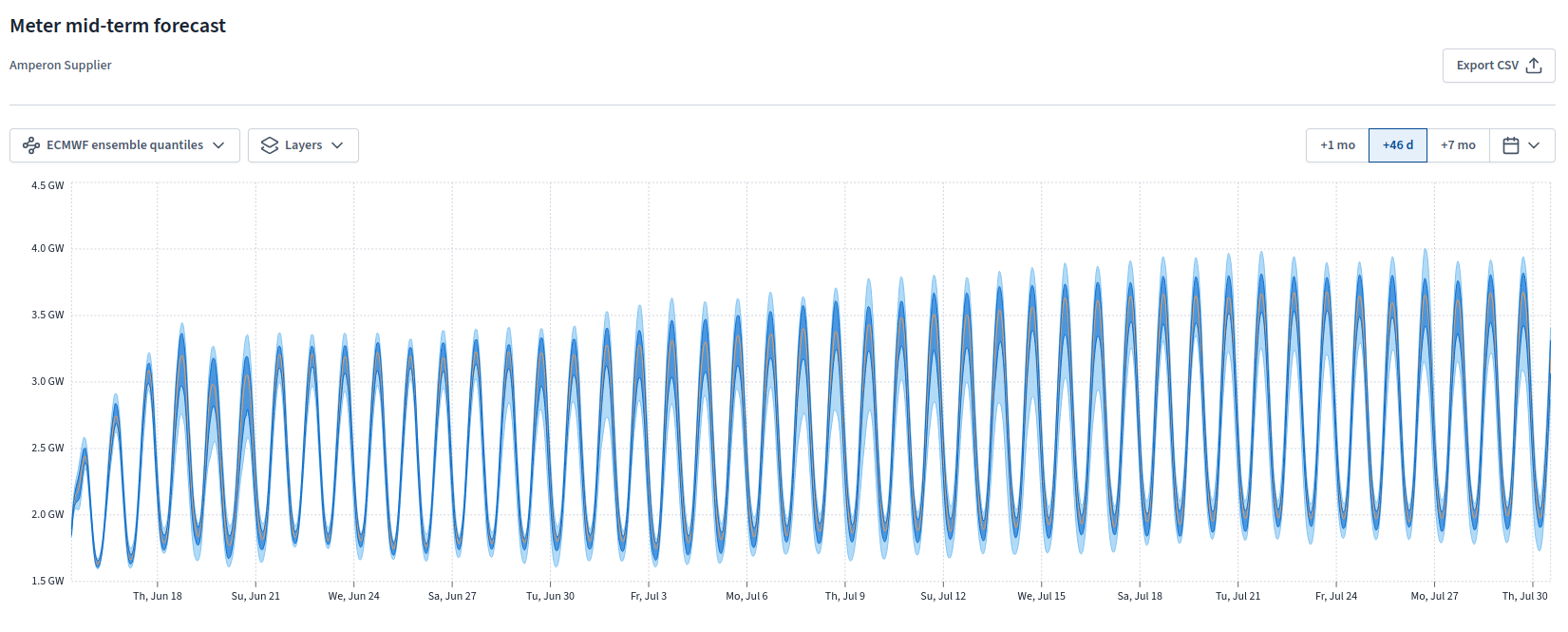
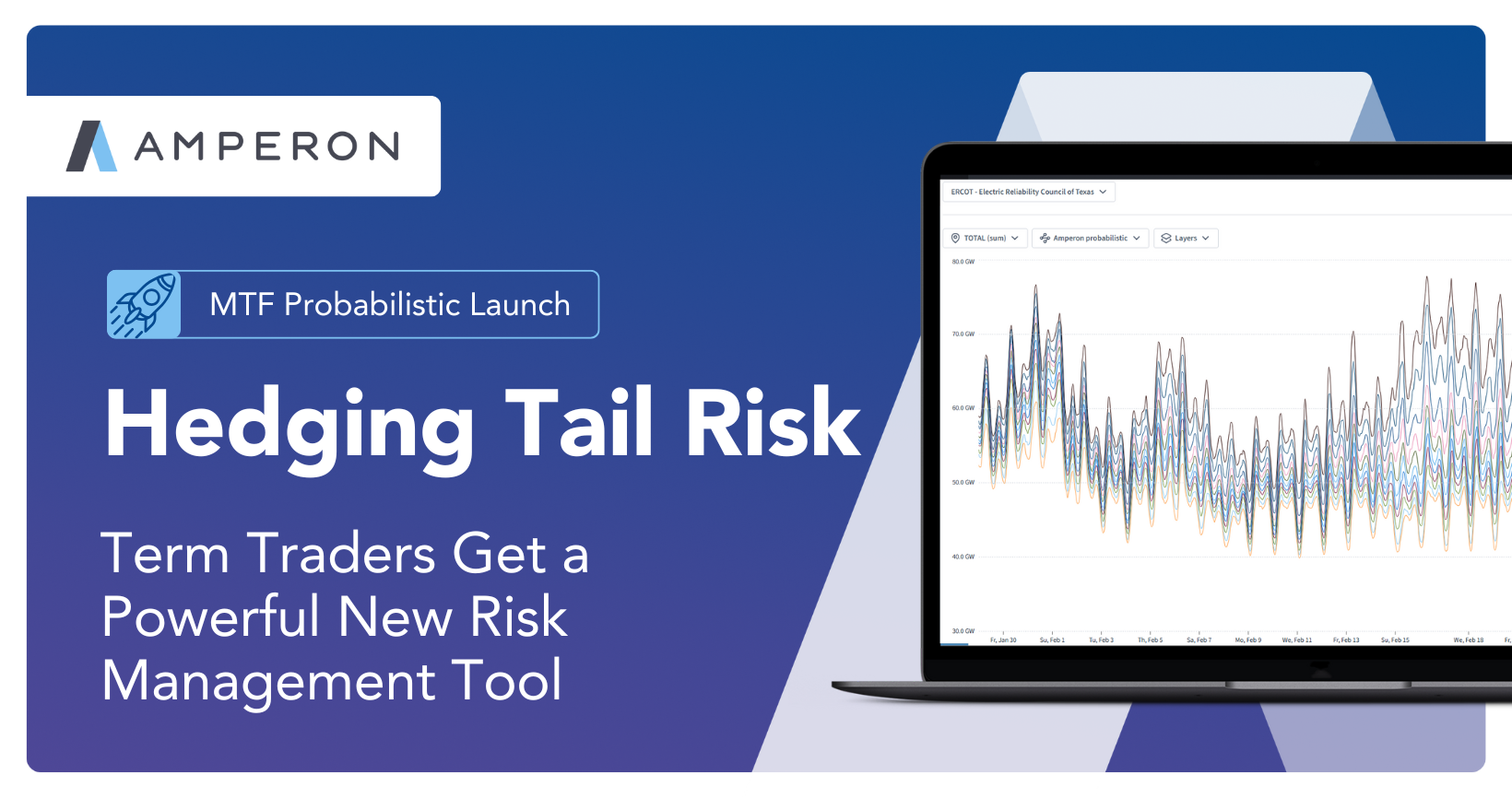
Today, Amperon launches its Meter Demand Mid-Term Forecast. With weather-informed sub-seasonal and seasonal models, trained on a utility's own interval meter data rather than grid-level proxies, the medium term is no longer opaque for load-serving entities.
Who benefits from weather-informed seasonal meter demand forecasting
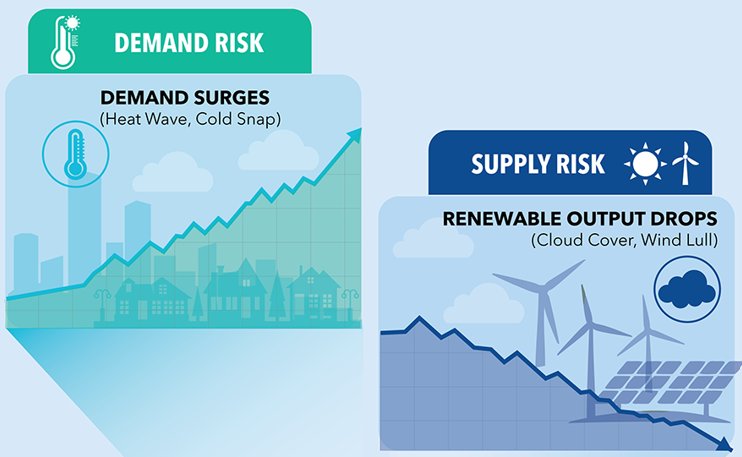
For procurement and supply teams, the practical problem with adding to a hedge book based on weather signal is defensibility. A weather ensemble that indicates elevated probability of a late-season heat event, translated into load scenarios for your specific service territory, gives procurement teams a basis for action that historical norms simply don't provide.
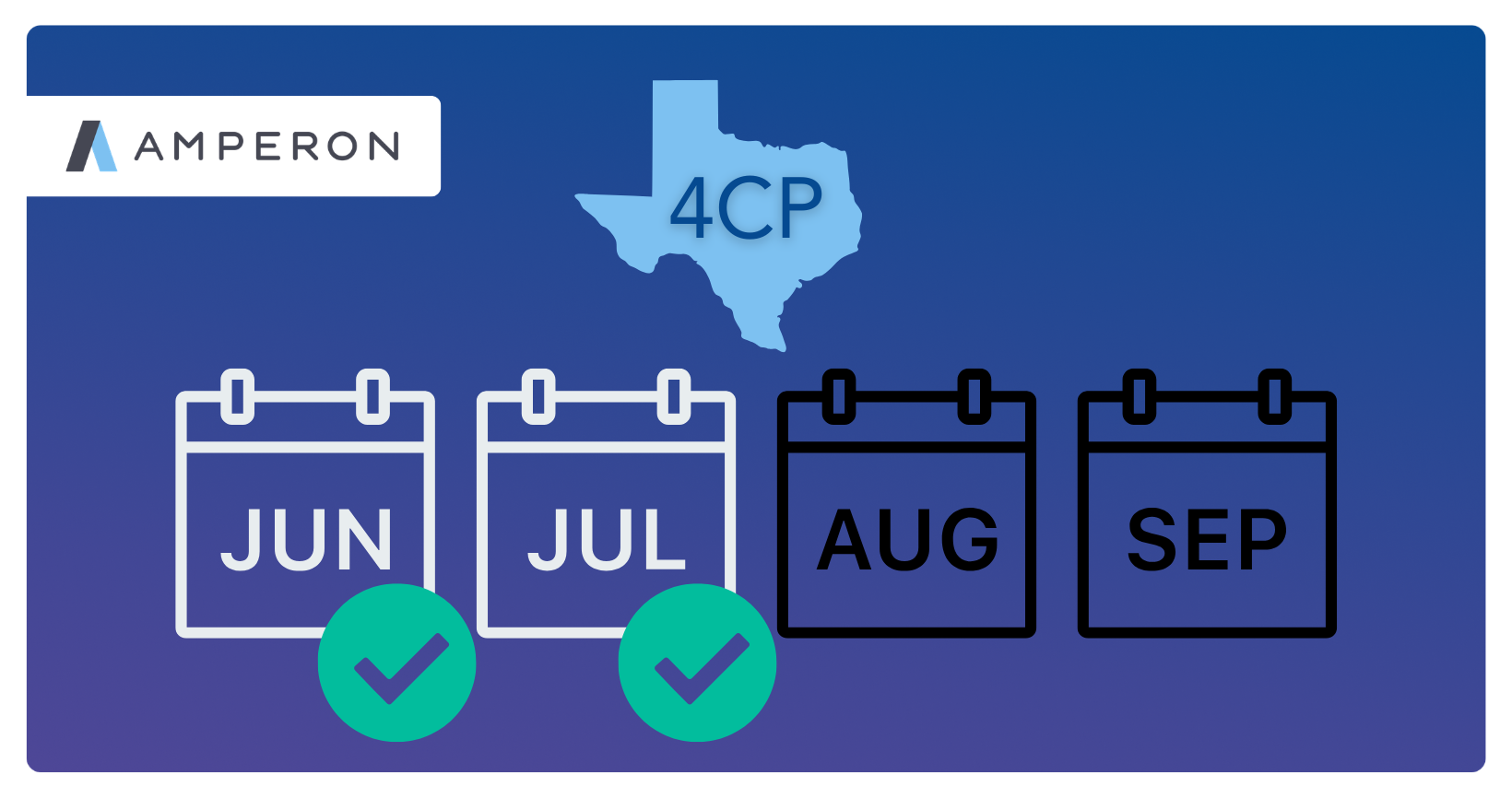
For system operations, the constraint is time. Planned transmission outages typically require submission 30 to 60 days in advance. A 46-day weather-informed view of elevated-demand probability changes what's visible when those windows are being evaluated. It doesn't eliminate scheduling conflict entirely, but it means teams are no longer making those decisions without cross-checking any atmospheric signal.
For risk and regulatory reporting, the value is narrative. Public power entities routinely need to justify reserve sizing to boards, credit counterparties, and regulatory bodies. A scenario-based load forecast that accounts for tail weather events provides a more defensible rationale than a climatological average.
Why a meter-level forecast isn't the same as a grid forecast
A grid-level mid-term forecast covers an ISO or balancing authority footprint that may span hundreds of thousands of square miles. A storm system that drives extreme load conditions in one part of that footprint may have minimal impact on a utility whose service territory sits 300 miles away.
Moreover, a utility with a high concentration of large commercial and industrial load responds differently to an incoming weather event than one serving a predominantly residential base. Those differences matter for load forecasting even when the weather input is the same. Meter-level calibration, built on interval data from across the utility's actual customer base, captures those dynamics in a way that a grid proxy cannot.
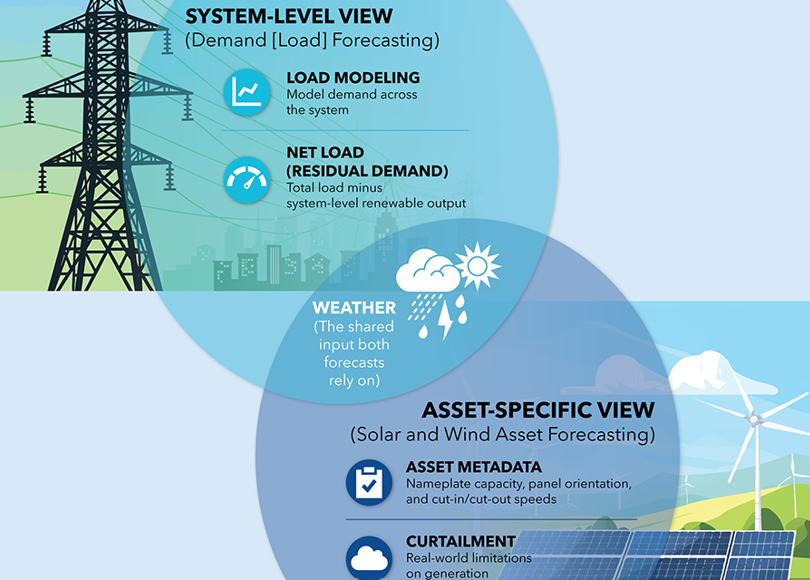
There's also the question of behind-the-meter resources. Solar installations, batteries, and other distributed resources affect net load in ways that don't show up in a grid-level forecast. Meter-level data gives us the ability to factor those into the forecast in a way that grid aggregates don't allow.
What's coming next to the Meter MTF
The Meter MTF currently surfaces quantiles from the 51 ECMWF ensemble members, giving users a view of the forecast distribution. Full probabilistic forecasting capabilities are in development and will be available soon, expanding how teams can characterize and communicate load risk across the medium-term window.
Our investment in this product reflects a broader commitment to closing the gaps in utility load intelligence, not just at the day-ahead horizon where forecasting is mature, but across the full planning timeline where teams are making decisions that affect reliability, cost, and risk posture for months at a time.
If your team is currently sizing forward hedges, scheduling planned outages, or defending reserve decisions with limited weather-informed signal beyond 15 days, we'd like to show you what seasonal load visibility can look like with the right data underneath it.
Explore Load Risk Management solutions

.svg)



































%20(3).png)
%20(2).png)
%20(1).png)





.png)


.avif)



.avif)
.avif)

.avif)
.avif)
%20(15).avif)
.avif)


.avif)

.avif)
.avif)